Spain
Granada Travel Guide — Alhambra, Albaicín & Private Tours
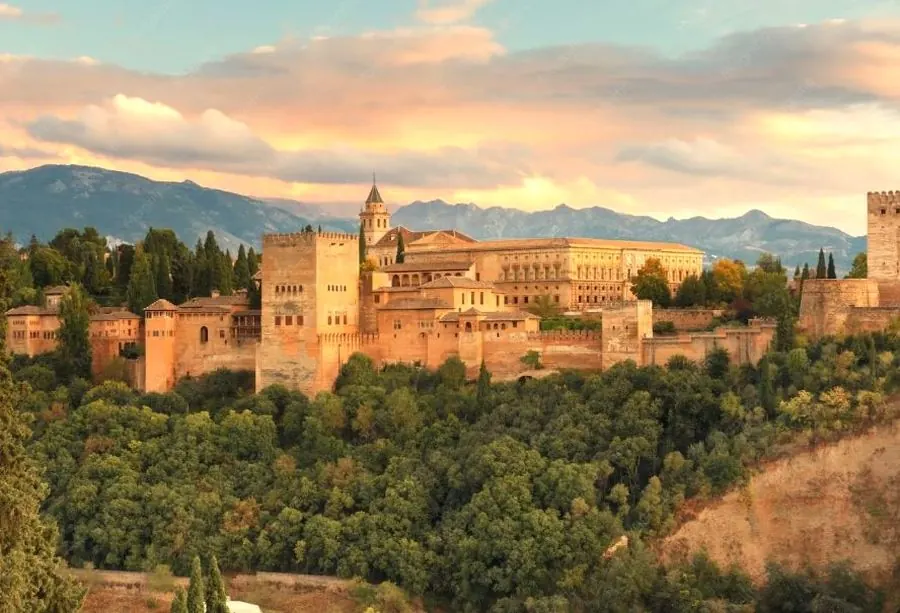
The last jewel of Al-Andalus, where the Alhambra has watched over the city for more than seven hundred years.
The last jewel of Al-Andalus, where the Alhambra has watched over the city for more than seven hundred years.
Granada is the city where Al-Andalus said its final word — and said it in the shape of a palace, with the snow-capped Sierra Nevada as a backdrop.
Few monuments in the world spark the anticipation of the Alhambra: a complex of Nasrid palaces, courtyards and gardens of almost impossible refinement, where water, light and geometry combine to create one of the masterpieces of Islamic architecture. But Granada is far more than its great icon: it is a city of contrasts, between the bustle of the Albaicín and the contemplative silence of the Generalife.
It is also, perhaps, the most characterful city in all of Andalusia: narrow, steep, full of unexpected viewpoints and a tapas tradition that still rewards visitors with something free alongside every drink. Granada is best enjoyed slowly, climbing and descending its slopes, letting yourself be surprised.
Of Ibero-Roman origin, Granada reached its greatest splendour as capital of the Nasrid Kingdom between 1238 and 1492, the last Muslim kingdom on the Iberian Peninsula. The Nasrid Palaces of the Alhambra were built and expanded mainly during the 14th century, under sultans Yusuf I and Mohammed V, at a moment of unparalleled artistic refinement.
In 1492, the Catholic Monarchs conquered Granada, ending almost 800 years of Muslim presence on the peninsula — the very same year Columbus set out on his first voyage to America. Shortly after, Charles V ordered his own Renaissance palace built within the Alhambra complex, an architectural contrast that still coexists today with the original Nasrid palaces.
That layering of cultures and styles — Muslim, Jewish and Christian — is precisely what makes Granada such a singular city: every street, every courtyard, tells a different part of that shared history.
A selection of what no Viavora itinerary skips.
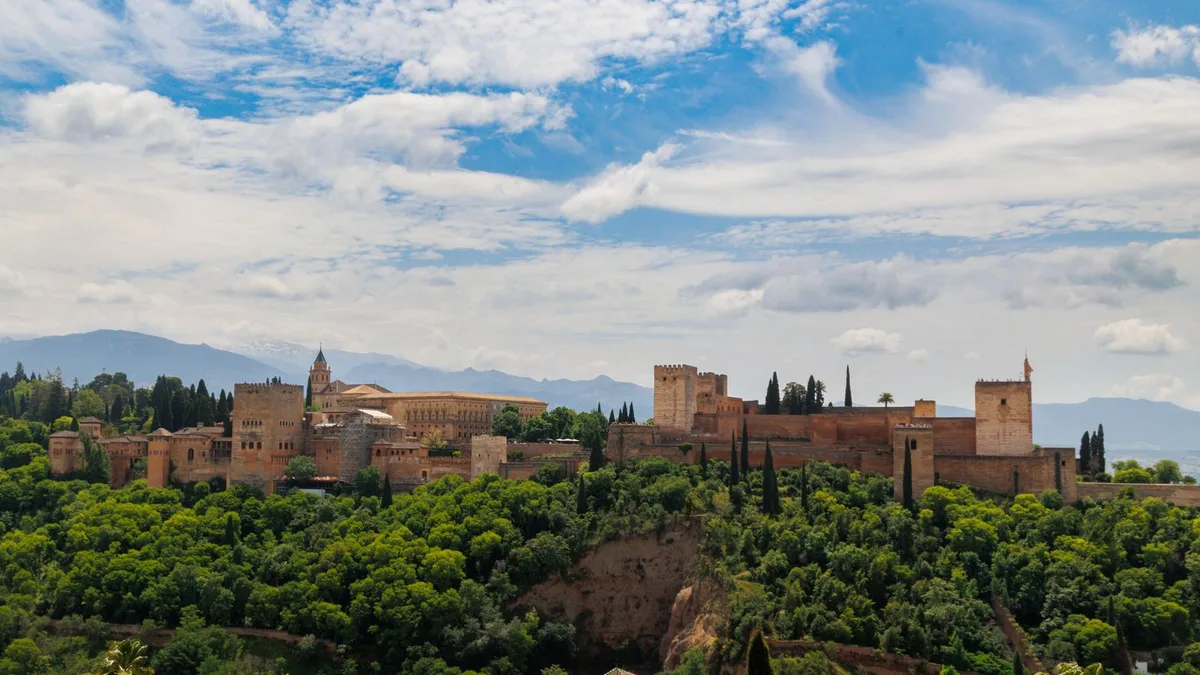
The most admired complex of Nasrid palaces and gardens in the world, declared a UNESCO World Heritage Site. Its halls — the Court of the Lions, the Court of the Myrtles, the Hall of the Ambassadors — display carved plasterwork and geometric tilework of almost impossible delicacy, designed to make the divine presence visible through light and water. The Generalife, the leisure garden of the Nasrid sultans, adds fountains, terraced courtyards and privileged views over the whole complex. An experience that requires booking tickets in advance — daily places are limited — and that rewards every minute of the wait.
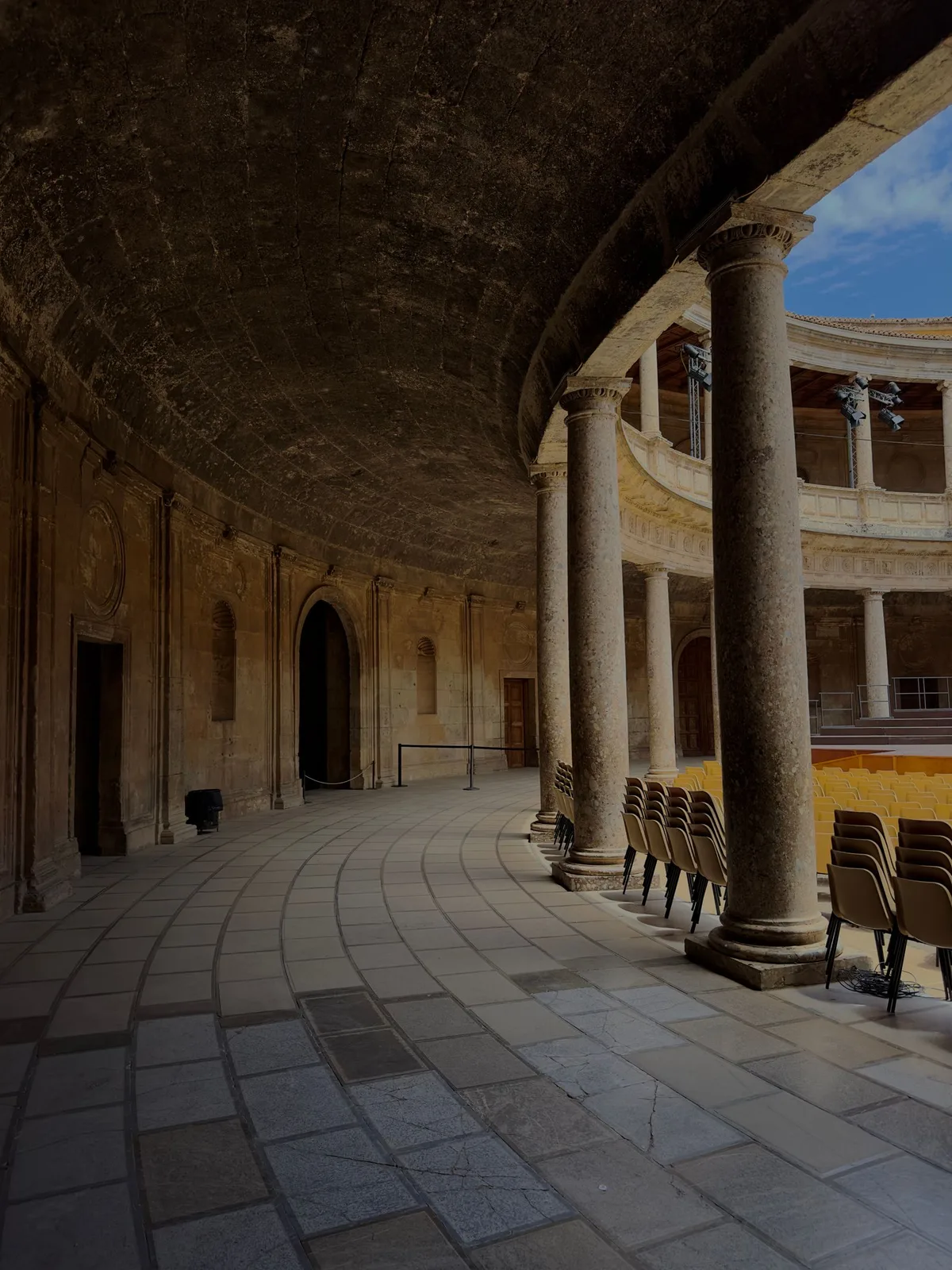
A Renaissance contrast within the Alhambra complex itself, with a perfect circular floor plan that surprises inside its square façade — one of the boldest architectural solutions of the European Renaissance. Commissioned by Charles V after his wedding in Granada, it symbolises the imperial will to leave a Christian mark beside the Nasrid palace. Its circular courtyard, ringed by superimposed Doric and Ionic columns, today houses the Granada Museum of Fine Arts and boasts such singular acoustics that it hosts classical music concerts in summer.
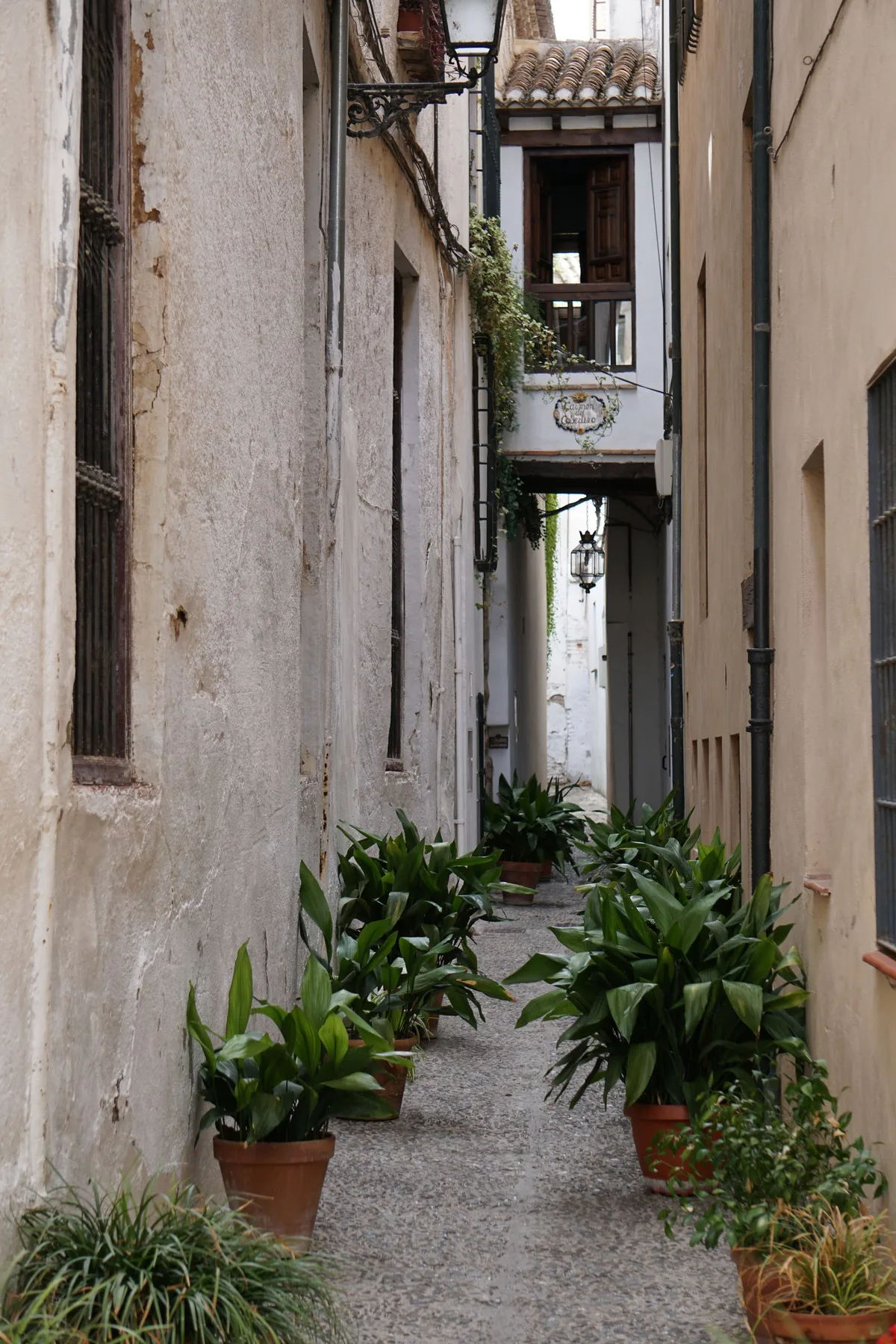
The old Moorish quarter, with steep, narrow streets that preserve almost intact the original Arab urban layout, a legacy of when it was the city's main Muslim settlement after the Christian conquest. Its carmen houses — dwellings with a walled interior garden, a tradition inherited directly from Andalusi architecture — and its small squares with fountains create an atmosphere that seems frozen in time. Besides the best views of the Alhambra from its lookout points, the Albaicín also preserves a lively community of teahouses and artisans who keep Granada's Arab memory alive.
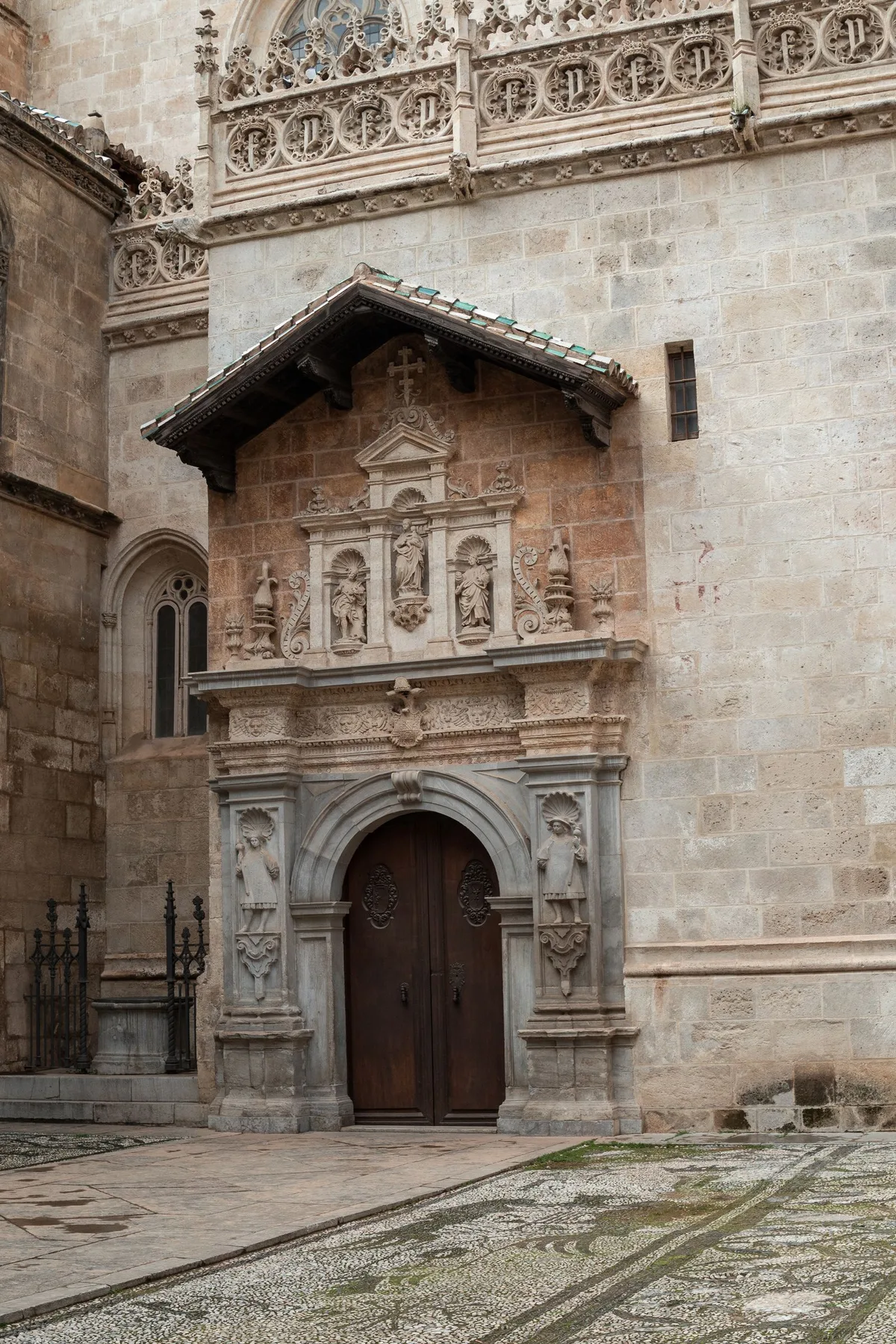
The eternal resting place of the Catholic Monarchs, Isabella and Ferdinand, in a Gothic temple of great historical and artistic value, commissioned by the monarchs themselves beside the cathedral as a symbol of the end of the Reconquista, which culminated precisely in Granada in 1492. Their Carrara marble tombs, carved with extraordinary detail, rest above a crypt where the original coffins can still be seen. The plateresque grille that separates the chapel, the work of Bartolomé de Jaén, is considered one of the finest in Spanish art, and the small adjoining museum holds Queen Isabella's crown and sceptre.
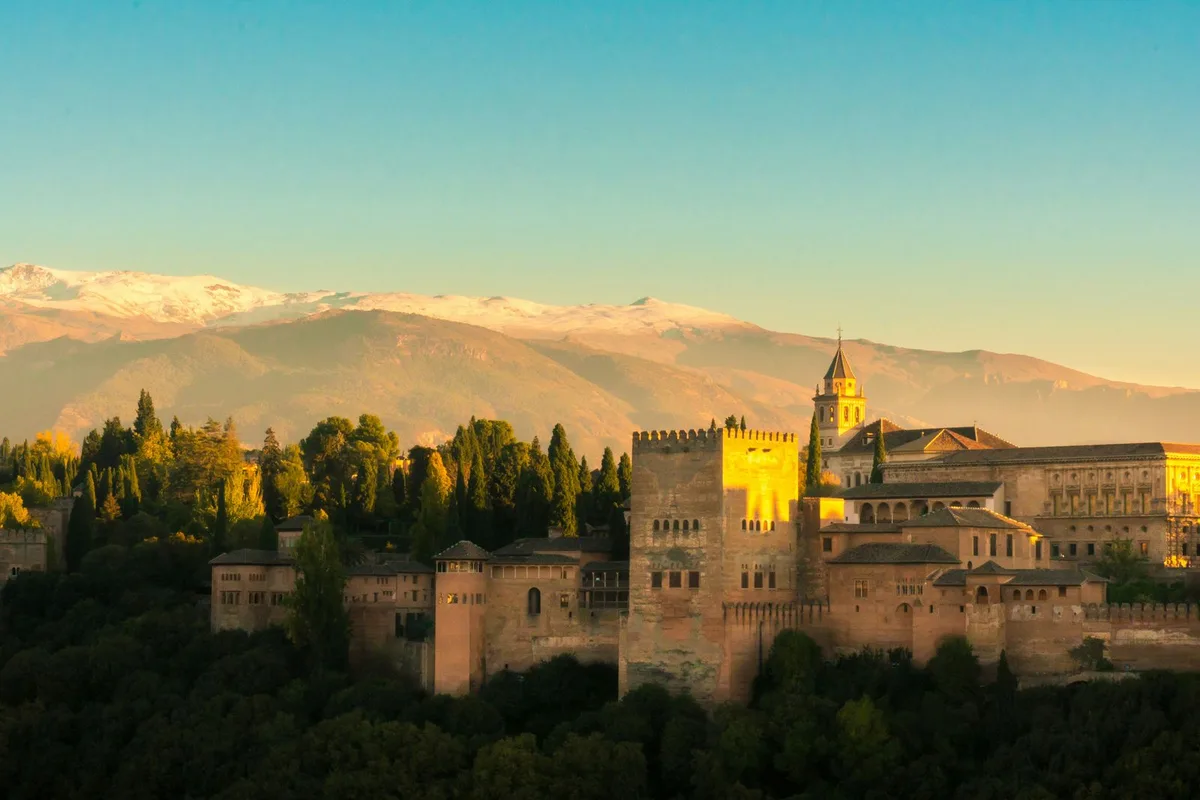
The favourite spot to watch the Alhambra at sunset, with the snow-capped Sierra Nevada as a backdrop — a view so celebrated it has inspired poets, painters and travellers for centuries. Located at the highest point of the Albaicín, next to the church of the same name, the lookout fills every evening with impromptu live music, street vendors and visitors waiting for the exact moment the sun turns the reddish walls of the Nasrid fortress golden. One of the most memorable moments of any visit to Granada.

One of the few cities in Spain where every drink still comes with a free tapa, a tradition that — according to local legend — dates back to a king who asked for his cup to be covered with a small plate to protect it from dust and wind. Today that custom has become a whole culture: every bar has its own signature tapa, and hopping between several venues in the centre or the Realejo district lets you enjoy a full dinner while paying only for your drinks. Touring its bars is also a way of touring its culture, and discovering a side of Granada every bit as authentic as its monuments.
Granada is one of the few Spanish cities that still serves a free tapa with every drink, a century-old tradition.
The Alhambra receives more than 2.7 million visitors a year, and booking tickets in advance is essential.
The name "Alhambra" comes from the Arabic "al-Hamra", meaning "the red one", after the colour of its walls at sunset.
The Catholic Monarchs, Isabella and Ferdinand, are buried in the Royal Chapel.
The Albaicín district preserves the original Arab urban layout almost intact.
Granada is one of the few cities in Europe where, on a single clear day, you can ski in the Sierra Nevada in the morning and stroll along the Mediterranean in the afternoon.
A private guide, handpicked hotels and skip-the-line access to every one of these sites.
Granada is an essential stop on any of our Spain and Portugal circuits.