Spain
Madrid Travel Guide — Royal Palace, Prado Museum & Private Tours
The capital that never closes: world-class art, non-stop gastronomy and an energy that catches you from the very first glass of vermouth.
The capital that never closes: world-class art, non-stop gastronomy and an energy that catches you from the very first glass of vermouth.
Madrid isn't visited — it's lived. It's the only European capital where you can have breakfast in a century-old market, lunch in a restaurant with centuries of history, see an original Velázquez before eating, and have tapas out on the street at midnight — without anyone batting an eye.
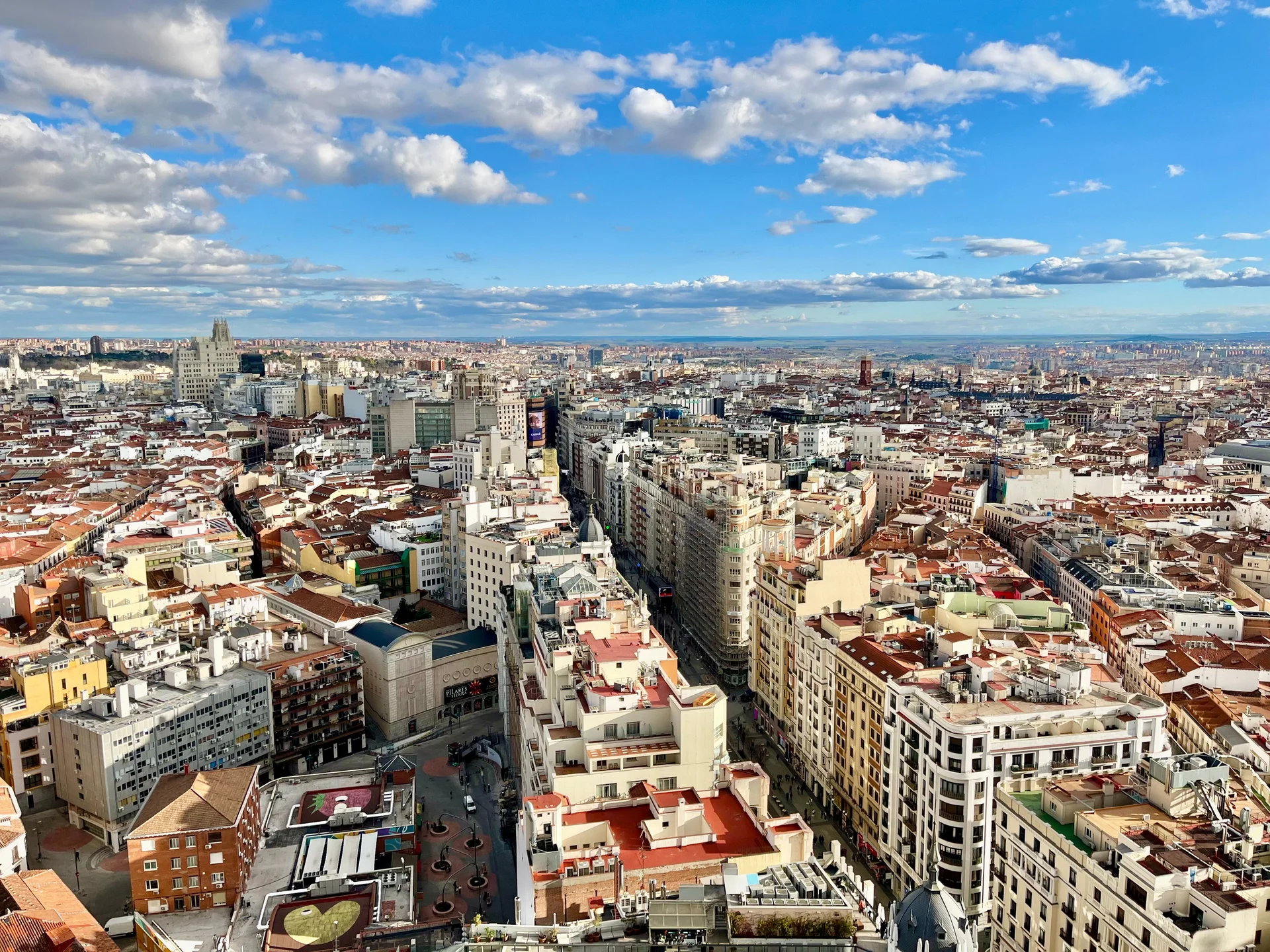
At 650 metres above sea level, Madrid is Western Europe's highest capital, and its skies — clear almost all year round — earned it the nickname "villa y corte" under a light that already captivated painters like Velázquez and Goya. But what truly sets Madrid apart isn't just its world-class museums — it's the pace of life. Here, life happens in the street, on the terraces, in the markets and in the squares, at any hour of the day or night.
It's a city built for the discerning traveller: monumental without being overwhelming, cosmopolitan without losing its castizo character, with a food scene that runs from the humblest calamari sandwich to Michelin-starred tables, often on the very same block.
Madrid began as a small Muslim fortress called Mayrit, founded in the 9th century by the Cordoban emir Muhammad I to guard the approach to Toledo. For centuries it remained a minor border outpost, until in 1561 King Philip II decided to permanently settle the itinerant royal court in this Castilian town — not for its size or wealth, but for its geographic position, almost exactly at the centre of the peninsula.
That seemingly pragmatic decision changed the city's destiny forever. Within just a few decades, Madrid went from a modest town to the capital of an empire on which, as the famous phrase goes, the sun never set. Under the Habsburgs and later the Bourbons, the city filled with palaces, convents and monumental squares like the Plaza Mayor, while artists such as Velázquez, and later Goya, painted the court and laid the foundations of what is today the Prado Museum.
The 20th century brought the Gran Vía, the Civil War, and finally the cultural explosion of the Movida Madrileña in the 1980s, when the city reinvented itself as an epicentre of creative freedom after decades of dictatorship. That same rebellious energy is still alive in its streets today.
A selection no Viavora itinerary ever skips.
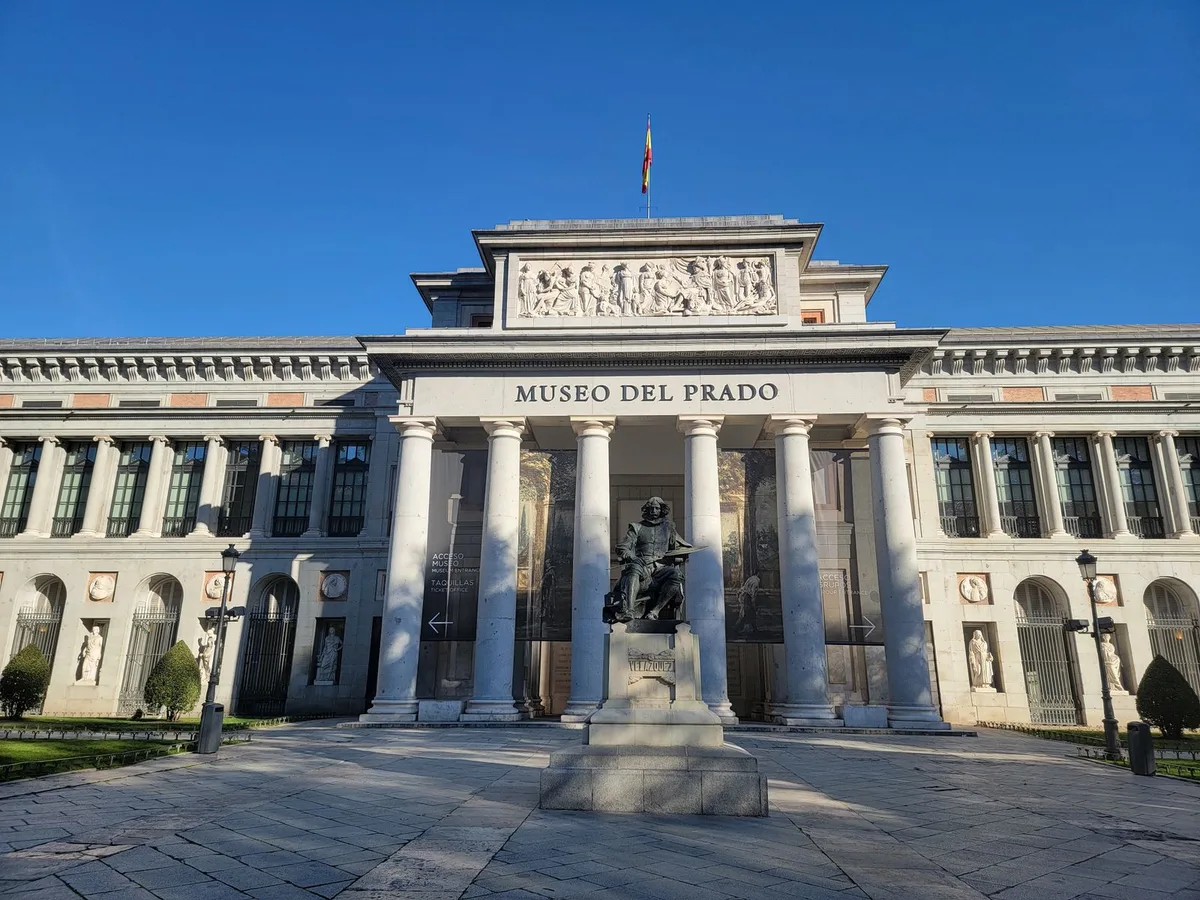
One of the finest art galleries in the world, home to the most complete collection of Velázquez, Goya and Bosch in existence. Its rooms bring together eight centuries of European painting — from the early Flemish masters to Rubens and Titian — arranged so that visitors trace, almost without realising it, the entire history of Western art. Several hours aren't enough to see it all, but a guided tour of the essentials — Las Meninas, The Garden of Earthly Delights, Goya's "Black Paintings" — turns it into an intense, memorable experience in barely ninety minutes.
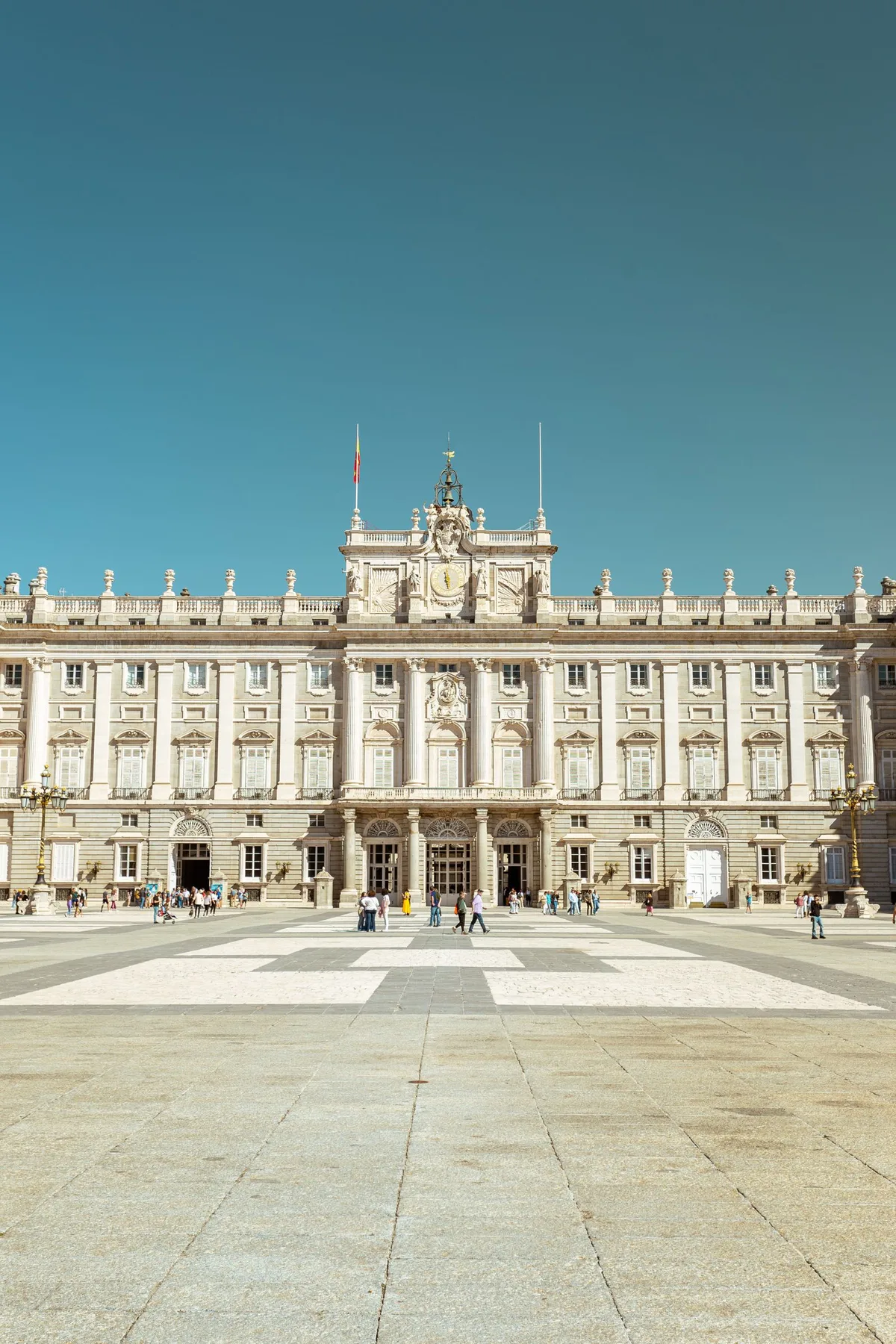
With over 3,000 rooms, it's the largest royal palace still in use in Western Europe. Inside it holds some of Spain's most spectacular decorative ensembles: the Throne Room with ceilings painted by Tiepolo, the world's most important clock collection, and a royal armoury gathering pieces from the era of the Catholic Monarchs. Although the royal family no longer lives here, it remains the setting for the country's most important state ceremonies, and the solemn changing of the guard, held Wednesdays and Saturdays, is a spectacle in its own right.
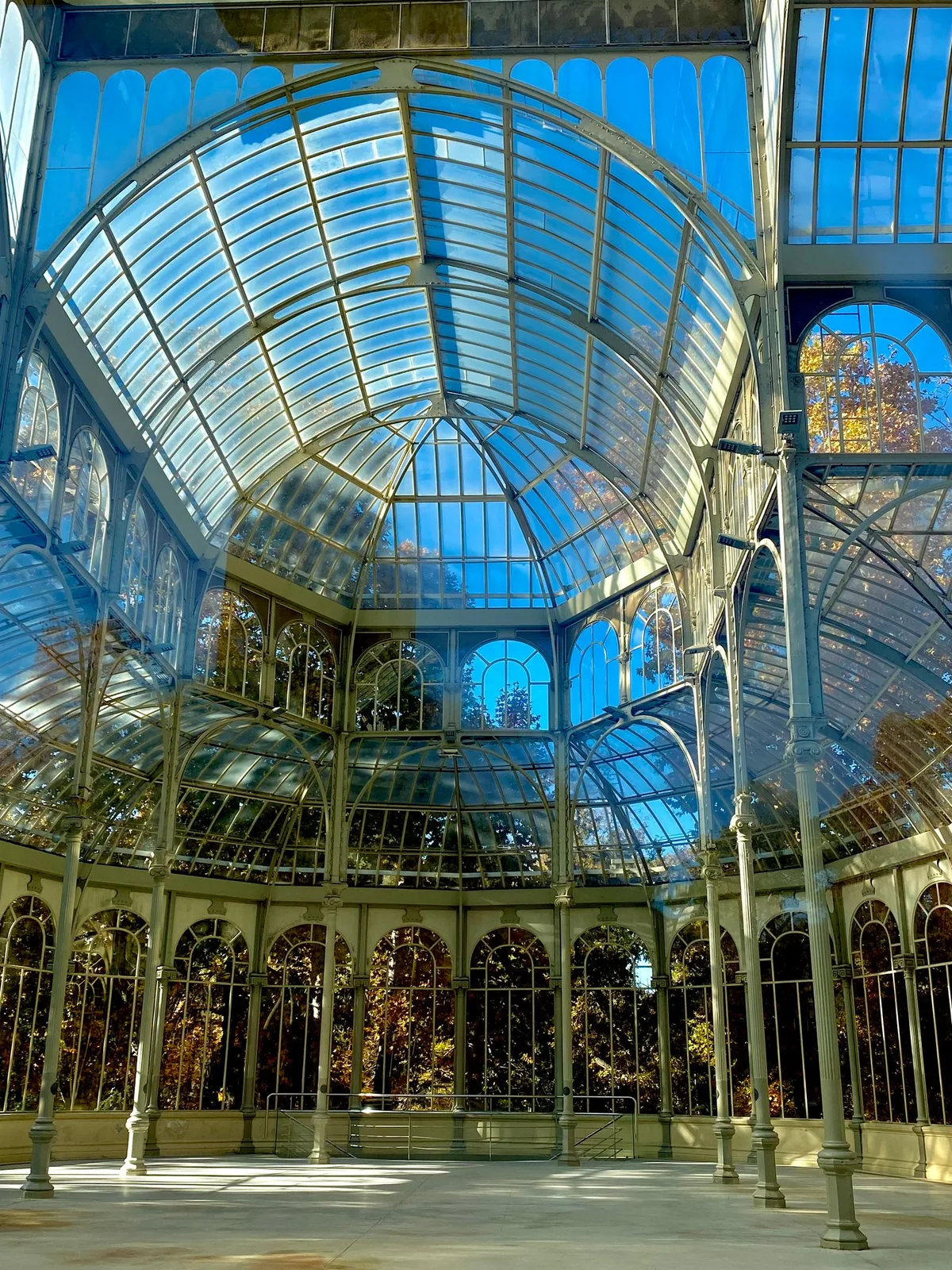
125 hectares of gardens, a lake for boating, and the striking Crystal Palace, built in 1887 entirely of iron and glass to house an exhibition of tropical plants. It was a private royal garden until 1868, when it opened to the public — today it's the favourite green lung of every madrileño, with corners as varied as the Rose Garden, the Fallen Angel (one of the few statues in the world dedicated to the devil), and the street musicians who liven up its paths every weekend.
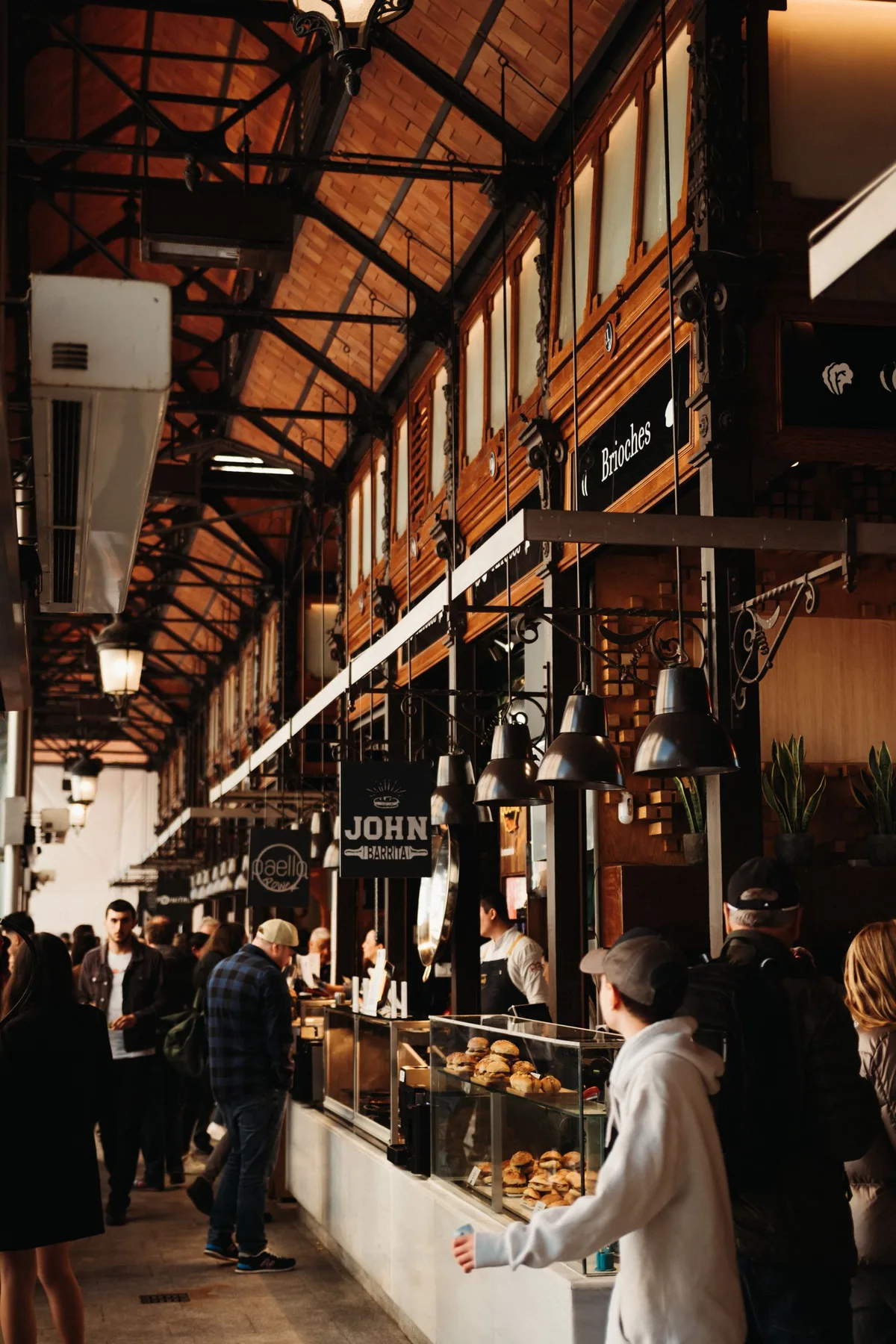
A 1916 iron-and-glass market reborn as a gastronomic temple: tapas, vermouth, Iberian ham and fresh seafood under one roof, right in the heart of Habsburg Madrid. Each stall specialises in a single product — anchovies in vinegar, croquettes, oysters, Spanish cheeses — letting you sample small portions from many different stands without ever sitting down to eat. It's also a social hub: as evening falls, it fills with people standing, drink in hand, in one of the liveliest atmospheres in the city.
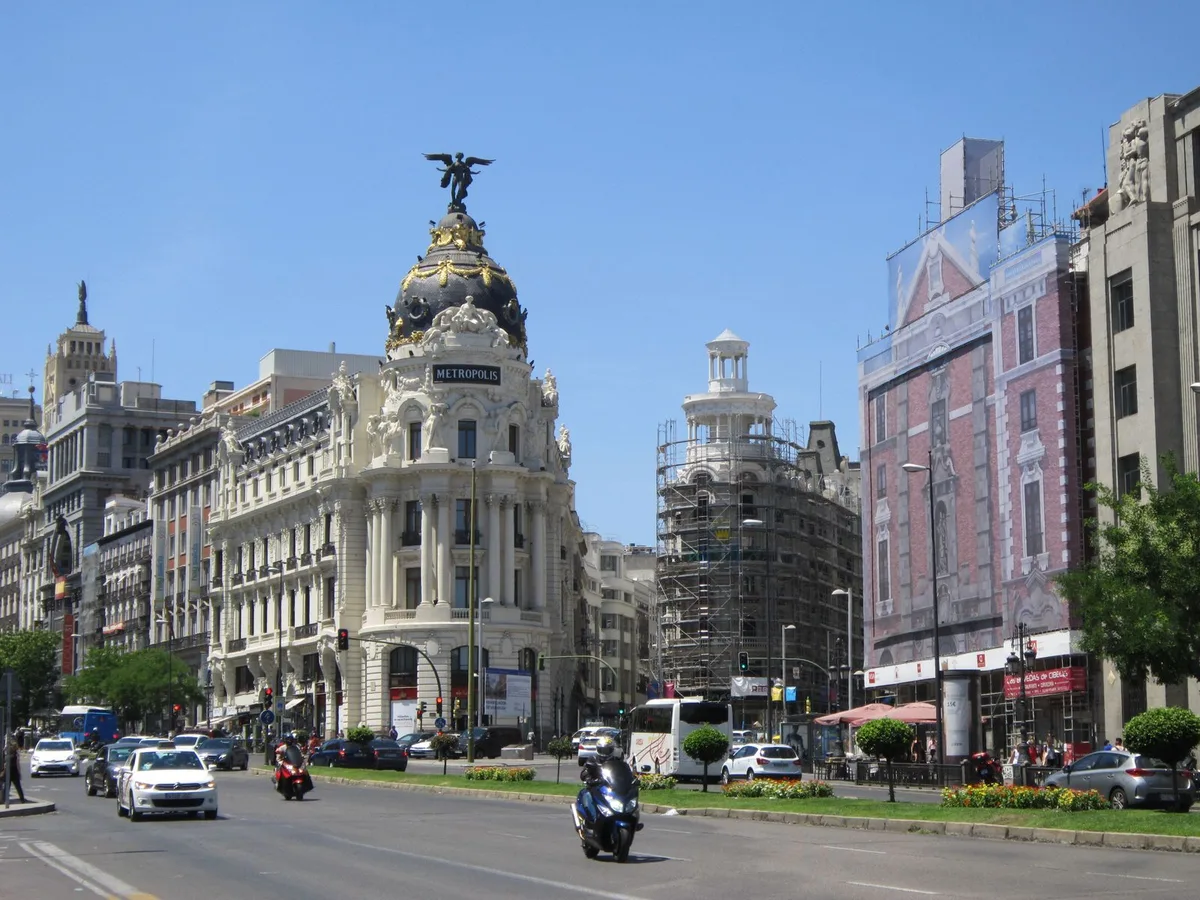
Madrid's own "Fifth Avenue": century-old theatres, early-20th-century architecture and the city's commercial pulse, lit up until the early hours. Built from 1910 onward to modernise the historic centre, it today boasts Spain's largest offering of musicals — some titles running for over a decade — alongside historic cinemas, department stores and some of the capital's most photographed buildings, such as the Metropolis Building or the Telefónica Building, Spain's first skyscraper.
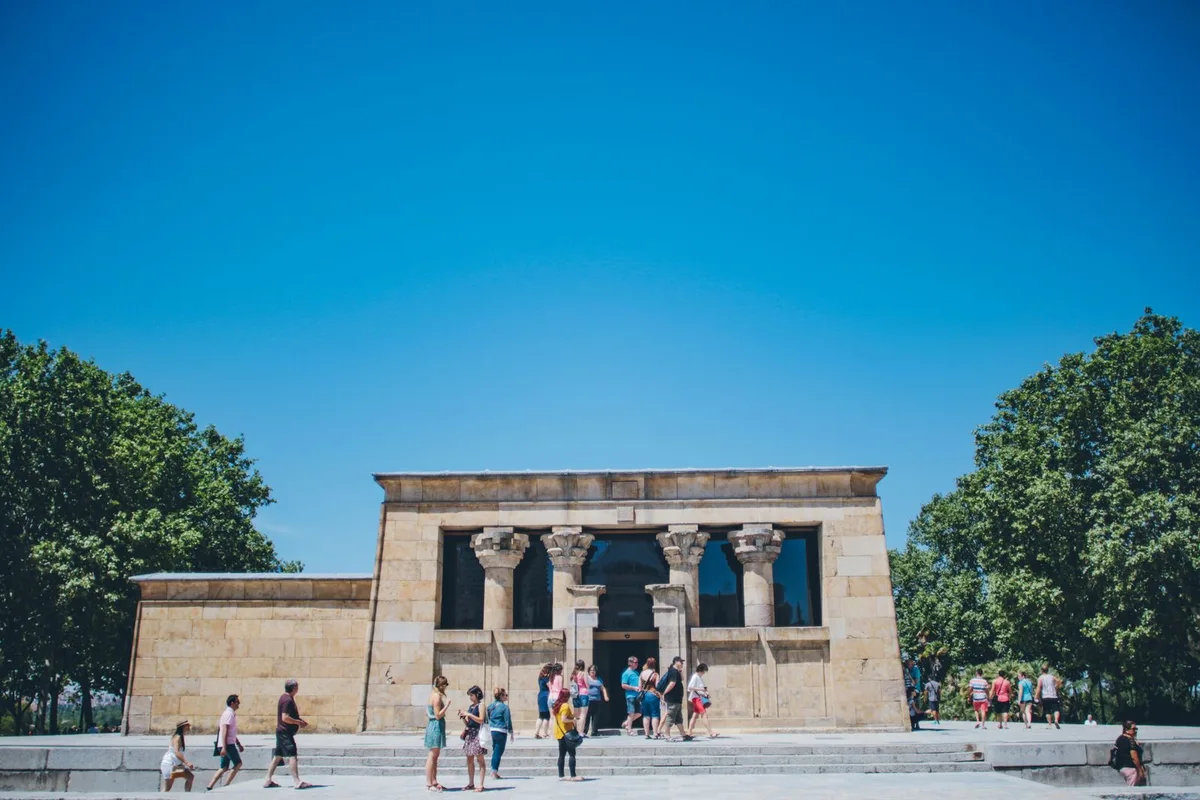
An authentic 2nd-century BC Egyptian temple, gifted to Spain in 1968 by the Egyptian government in gratitude for Spanish technical assistance in saving the monuments of Nubia, threatened by the construction of the Aswan Dam. Stone by stone, it was dismantled, transported and rebuilt in Madrid, becoming one of the few complete Egyptian temples that can be visited outside Egypt. Watching the sunset from here, with the temple reflected in the pool and the city as a backdrop, is one of any madrileño's favourite plans.
Madrid is Western Europe's highest capital, at 650 metres above sea level — hence its remarkably clear skies and distinctive light.
The city's symbol, the bear and the strawberry tree, is over 800 years old and today watches over Puerta del Sol, the meeting point par excellence for madrileños.
Puerta del Sol is home to "Kilometre Zero": the exact point from which all of Spain's radial highways are measured.
Madrid has more bars and restaurants per capita than any other European capital — street social life is, quite literally, part of its DNA.
The Prado Museum holds the largest collection of works by Francisco de Goya in the world, including his famous "Black Paintings".
Hot chocolate with churros at five in the morning, after a night out, is almost a rite of passage for any visitor.
A private guide, handpicked hotels and skip-the-line access to every one of these sites.
Madrid is the perfect gateway to any of our Spain and Portugal circuits.