Spain
Seville Travel Guide — Royal Alcázar, Flamenco & Private Tours
The city where flamenco was born, and where every corner looks staged for an opera.
The city where flamenco was born, and where every corner looks staged for an opera.
Seville doesn't play along with the cliché of a dreamed-up Spain — it invented it. Orange blossom, tiled patios, guitars at dusk: here, all of that is simply everyday life.
Few cities pack so much monumental beauty into such a walkable space. In a few hours you can go from the Mudéjar halls of the Royal Alcázar to the Gothic immensity of its Cathedral, and from there to a neighbourhood of whitewashed houses where life unfolds among orange-tree squares and terraces buzzing well into the night. Seville rewards those who walk slowly.
And then there's flamenco, which here is not just another tourist show but a living tradition felt in the air, in the raw voices of the tablaos, and in the rhythm that seems to move the whole city. Seville is seen with the eyes, but remembered on the skin.
Of Tartessian and Roman origin — when the city was known as Hispalis — Seville flourished under Muslim rule from the year 712 under the name Ishbiliya, becoming capital of the Almohad Empire in the 12th century. It was then that the Giralda was built as the minaret of the Great Mosque, between 1184 and 1198, one of the great symbols of the city to this day.
After the Christian reconquest of 1248 by Ferdinand III, Seville went through centuries of transformation, but its true golden age arrived in 1503, when it was granted the monopoly on trade with America through the Casa de Contratación. Almost overnight, it became the richest city in Spain, the obligatory gateway for all the gold and silver arriving from the New World.
That economic splendour left an indelible mark on its architecture, traditions and identity, still expressed today with particular force in celebrations such as Holy Week and the April Fair.
A selection no Viavora itinerary ever skips.
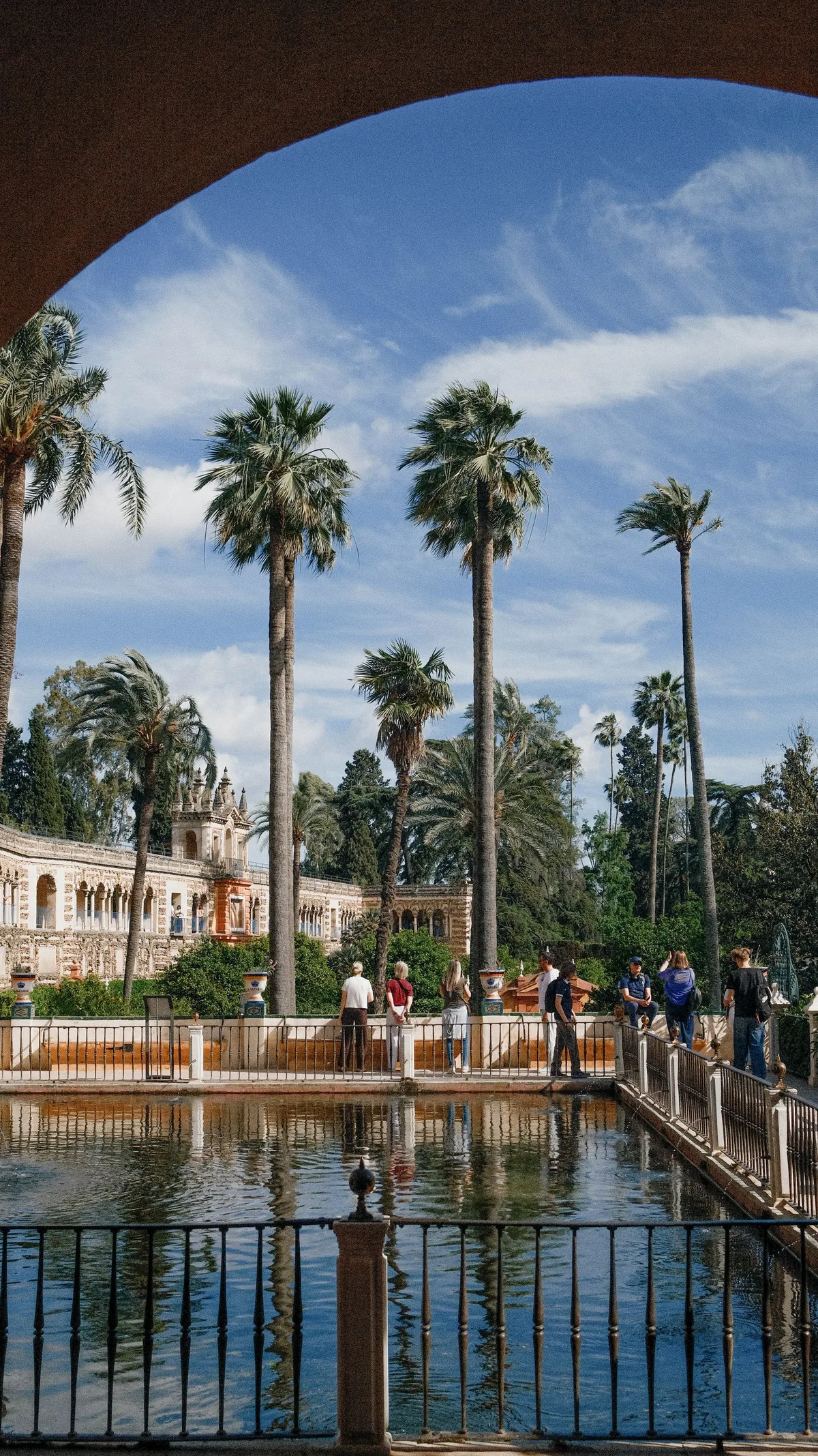
A Mudéjar palace declared a World Heritage Site, with courtyards, gardens and halls of almost hypnotic beauty. Built by order of Pedro I over a former Muslim fortress, it blends carved wooden ceilings, latticed plasterwork and geometric tiling with the same mastery as Granada's Alhambra, to the point that Granadan craftsmen worked on its decoration. Its gardens, with fountains, pavilions and terraced galleries, have served as a filming location for series such as Game of Thrones. It remains the official residence of the Spanish Royal Family during their visits to the city, making it the oldest royal palace in Europe still in use.
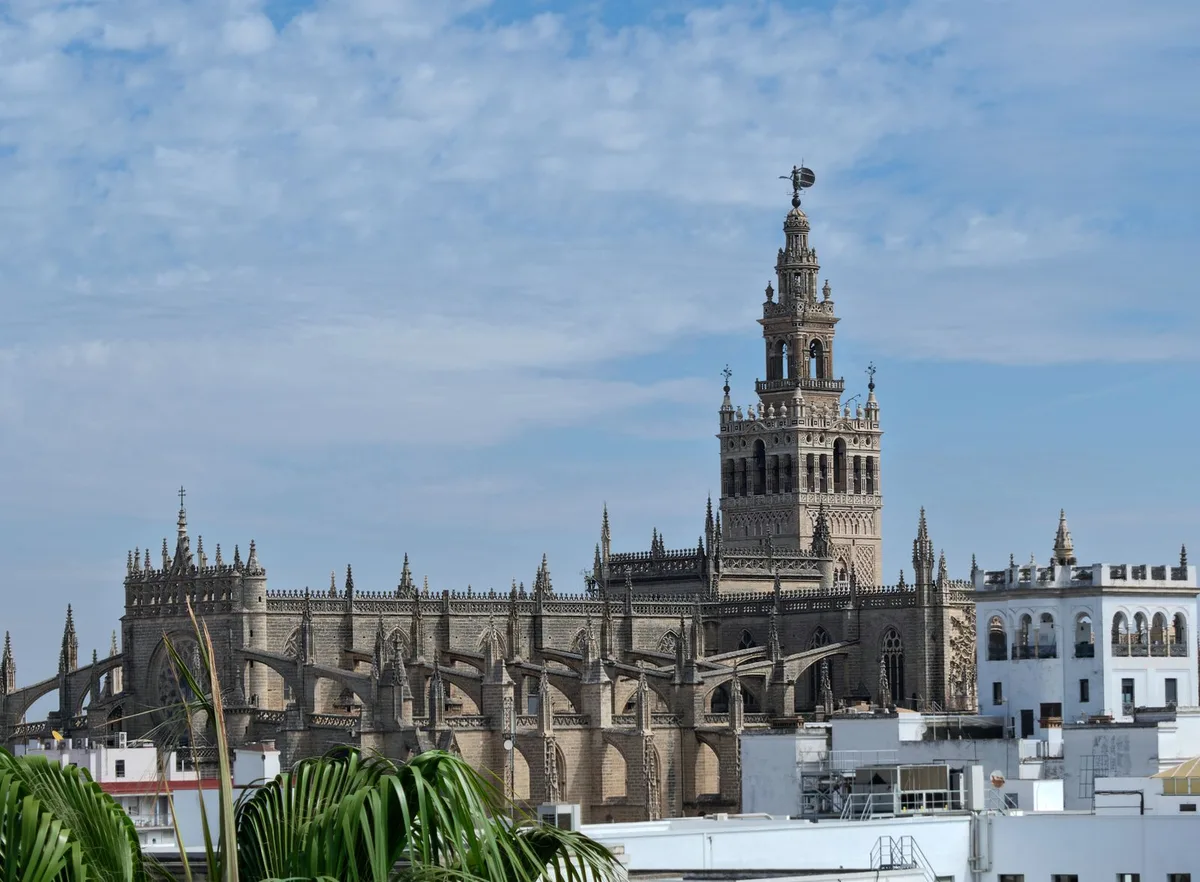
The largest Gothic cathedral in the world, built from 1401 on the site of the former great mosque with the declared ambition of raising a temple "so grand that those who see it will take us for madmen." Inside lies the mausoleum of Christopher Columbus, borne by four heralds representing the kingdoms of Spain, and the High Altar, the largest Gothic altarpiece in the world, carved in oak and covered in gold leaf. Crowning the ensemble is the Giralda, a former 12th-century Almohad minaret converted into a bell tower, climbed via ramps — not stairs — originally designed so the muezzin could ride up on horseback. The views from the top are among the best in the city.
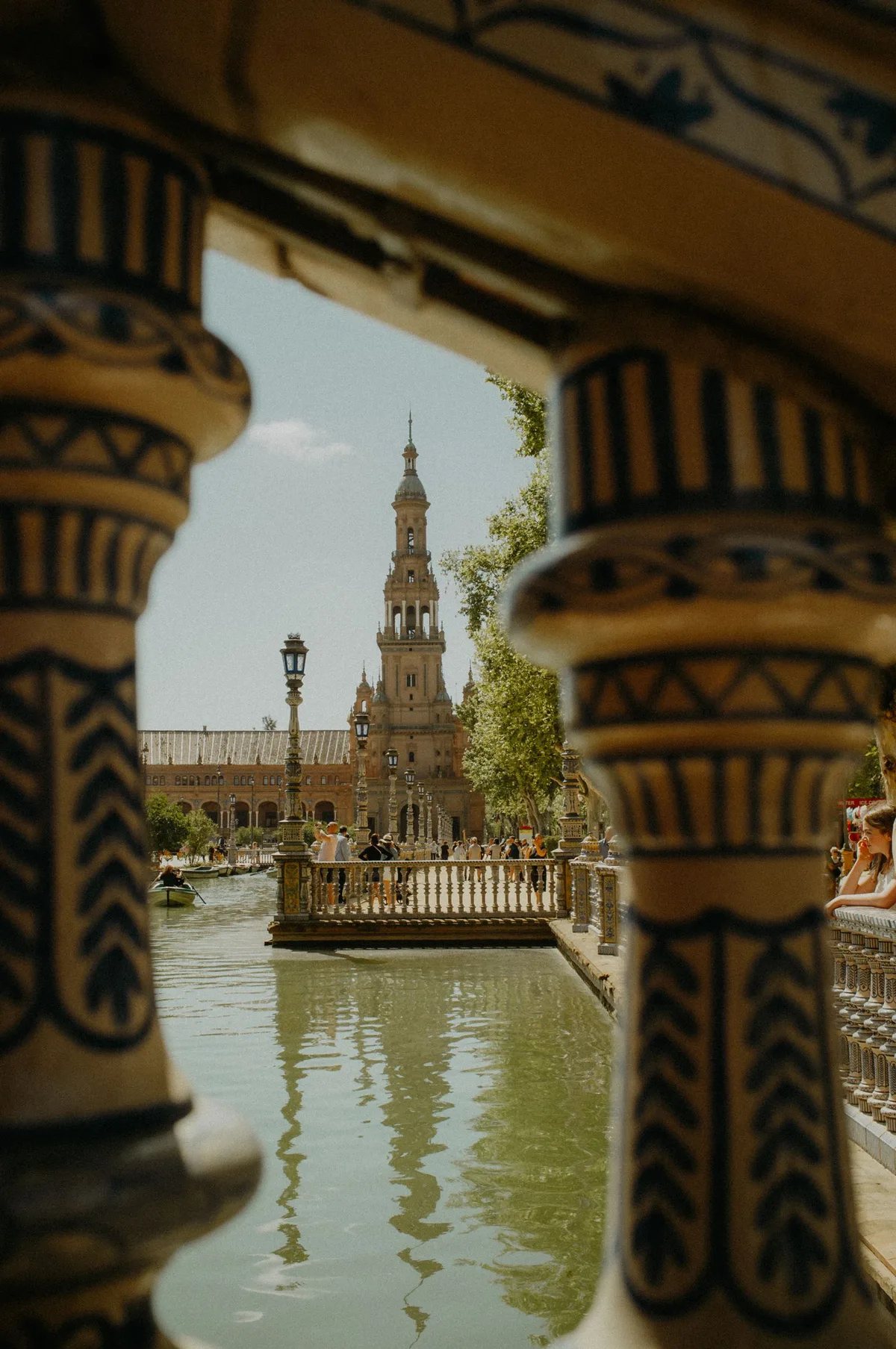
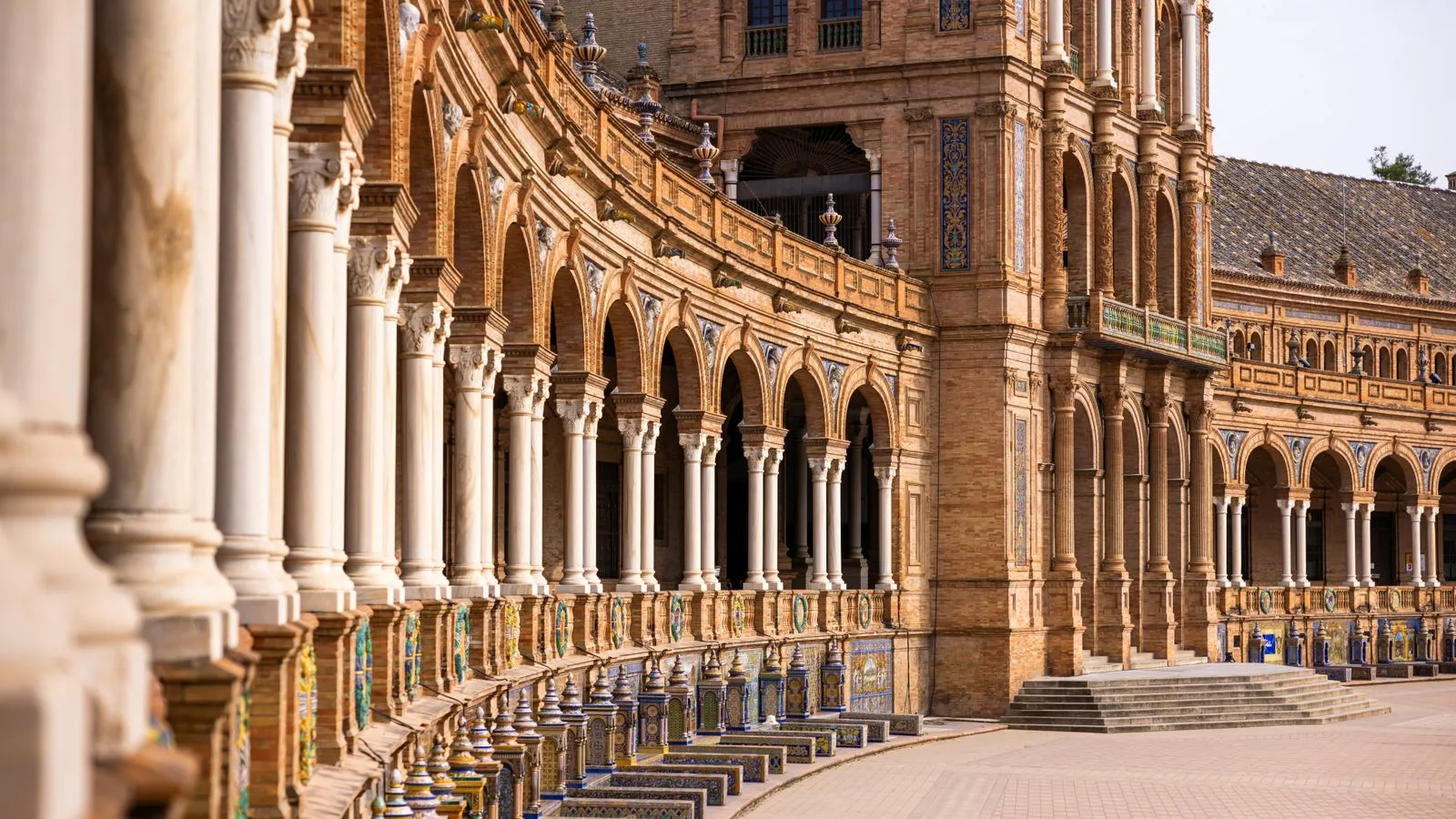
A monumental semicircle of tiles, towers and navigable canals, built for the 1929 Ibero-American Exposition as a showcase of Spanish power to the world. Its most distinctive feature is its 48 tiled alcoves, one for each Spanish province, decorated with maps and historical scenes unique to each region — a small tour of all of Spain without leaving the square. Visitors can cross its canals by rowing boat or simply stroll beneath its arcades, one of the most photographed spots in all of Spain and also the setting for several Hollywood films.
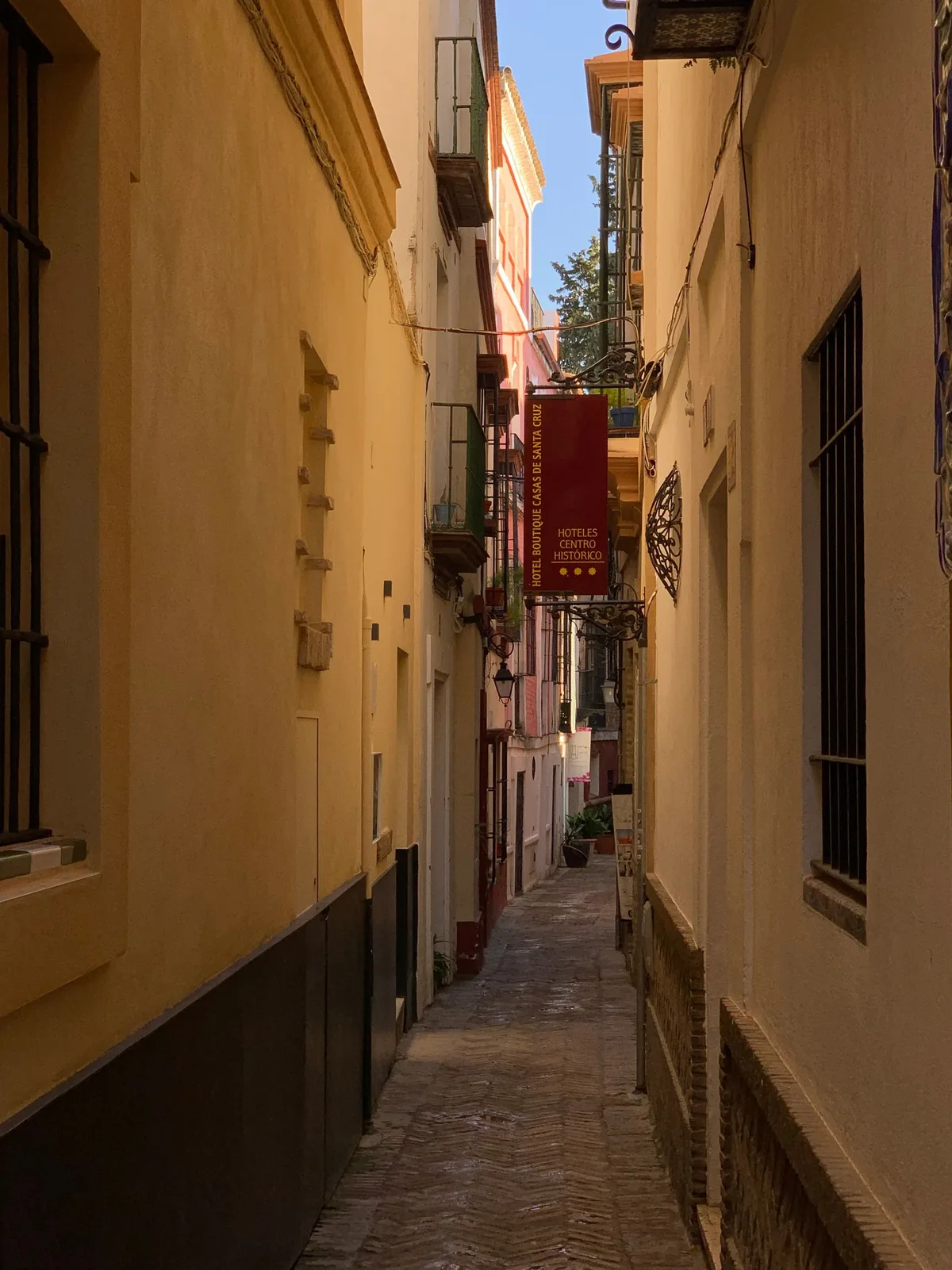
Whitewashed alleys, flower-filled courtyards and orange-tree squares make up the city's former Jewish quarter, the medieval Judería, inhabited until the expulsion of 1492. Its houses conceal private courtyards packed with potted plants and tiles that, in spring, during the patio festival, open to the public — a spectacle of colour that draws visitors from across Spain. The perfect place to wander without hurry, dine on a terrace overlooking the Giralda, and discover why Seville captivates just as much by night as by day.

Experiencing an authentic tablao is one of Seville's essential experiences: singing, dancing and guitar in their purest form, in a city many consider the birthplace of flamenco. Born in the Roma neighbourhoods of Triana and Santa Cruz in the 18th century, Seville's flamenco retains a rawer, more visceral character than its touristy versions, with performers conveying emotion — duende, they call it — rather than pure technique. An intimate tablao, with footwork echoing just metres away and hands clapping out the rhythm, leaves a memory as powerful as any monument in the city.
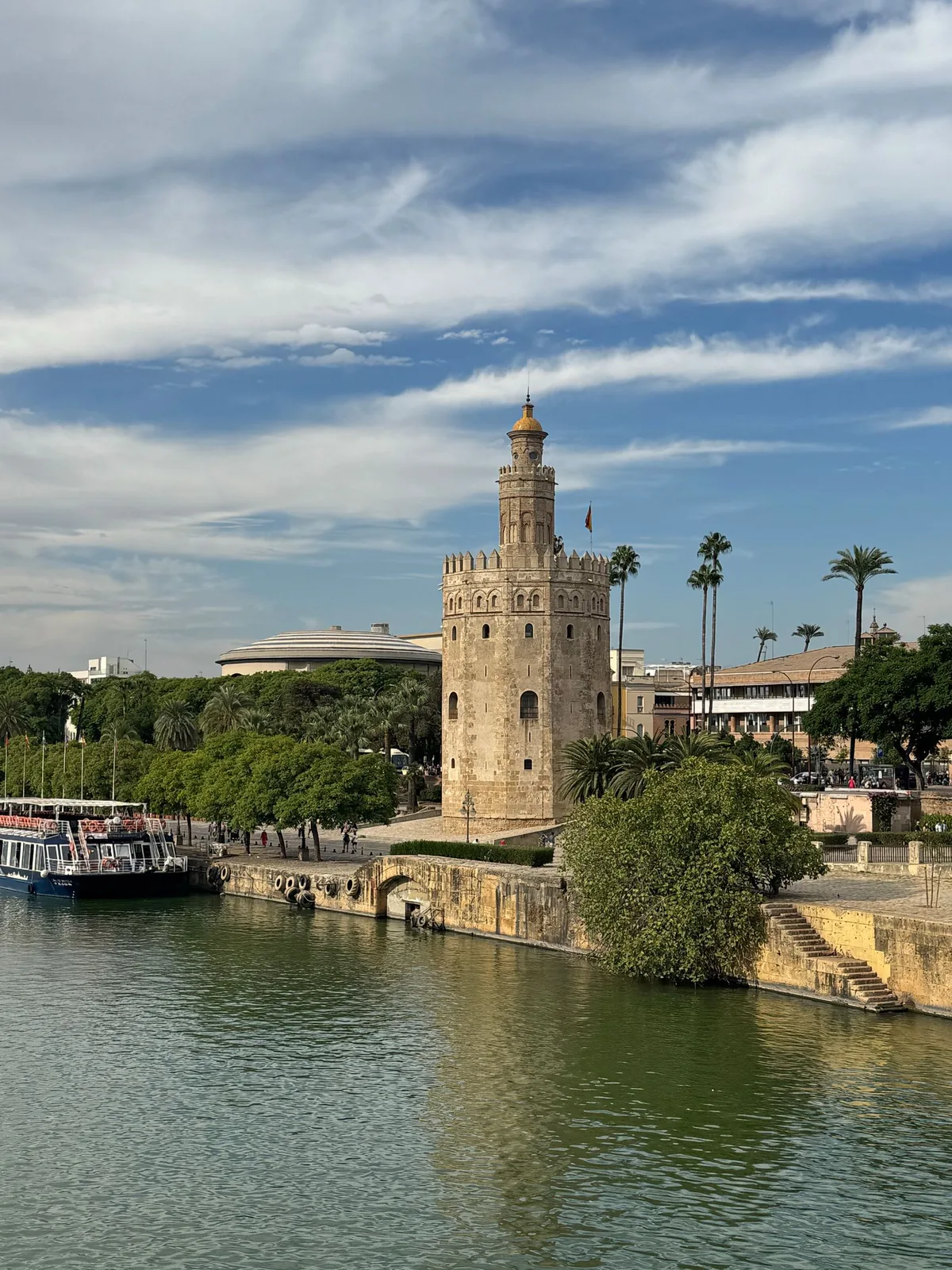
An Almohad tower on the banks of the Guadalquivir, built in the 13th century as a lookout for the river port, with a chain that stretched to the opposite bank to block enemy vessels. It watched the trade fleets with America depart and return during the centuries of Seville's monopoly on trade with the Indies, when the city became one of the wealthiest ports in the world. Today it houses a small naval museum and offers, from its upper terrace, one of the loveliest views of the river and the Triana quarter on the far bank.
Seville Cathedral is the largest Gothic cathedral in the world and houses the tomb of Christopher Columbus.
The Giralda was originally the minaret of a 12th-century Almohad mosque, later converted into a Christian bell tower.
The Royal Alcázar remains the official residence of the Spanish Royal Family during their visits to the city, and is the oldest royal palace in Europe still in use.
Plaza de España was built for the 1929 Ibero-American Exposition and has appeared in films such as "Star Wars: Episode II".
Seville, together with other Andalusian cities, is considered the birthplace of flamenco.
The April Fair, with its casetas, flamenco dresses and nights of sevillanas, is one of the largest popular festivals in all of Spain.
A private guide, handpicked hotels and skip-the-line access to every one of these sites.
Seville is an essential chapter in any of our Spain and Portugal circuits.