Spain
Toledo Travel Guide — Primate Cathedral, Alcázar & Private Tours
The city where Muslims, Jews and Christians lived side by side for centuries — and whose skyline has barely changed since El Greco painted it.
The city where Muslims, Jews and Christians lived side by side for centuries — and whose skyline has barely changed since El Greco painted it.
Less than an hour from Madrid, Toledo is an open-air museum where three cultures lived side by side for centuries and left their mark on every corner.
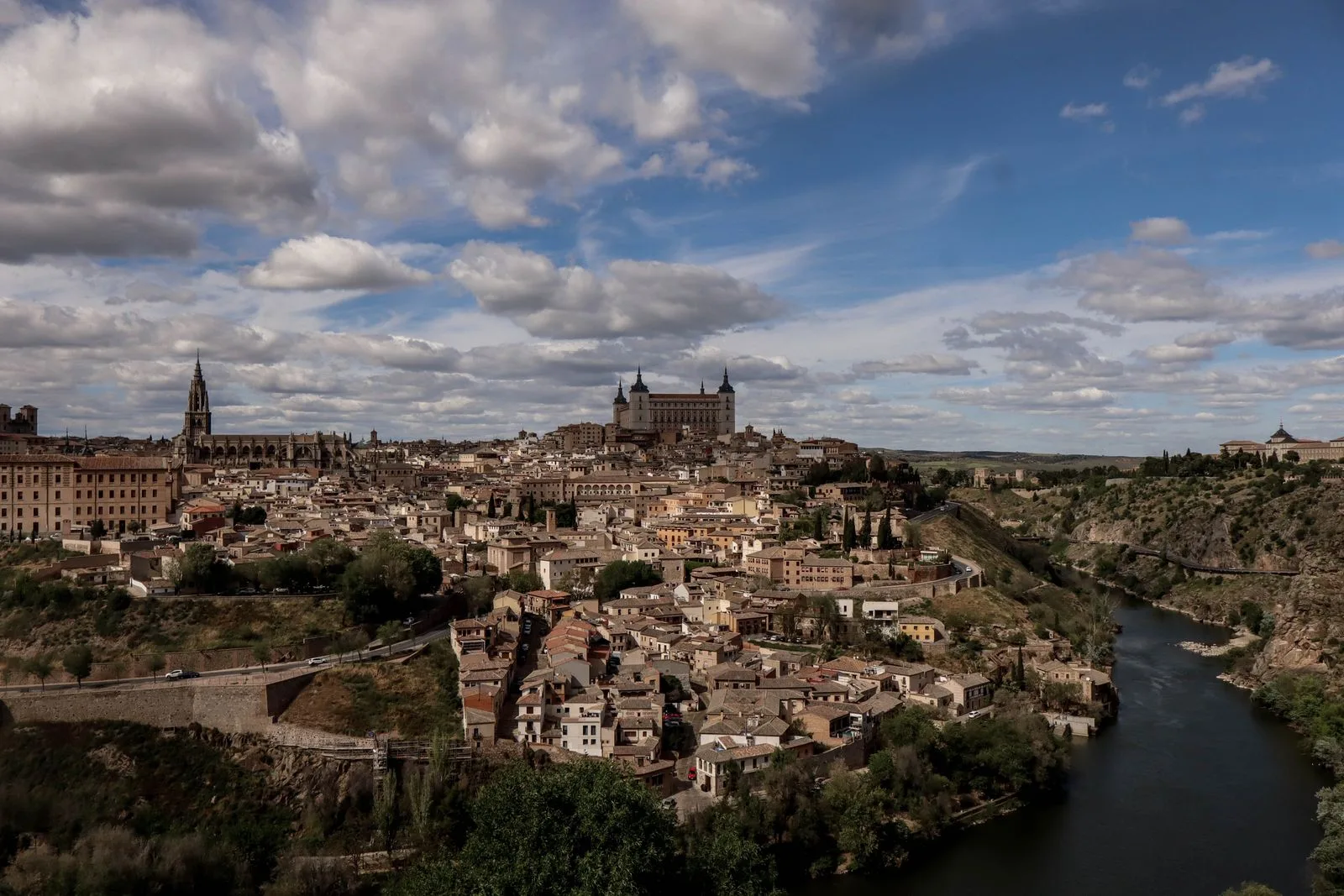
Perched above a near-closed bend of the Tagus River, Toledo seems frozen in time: synagogues, mosques turned into churches and Gothic cathedrals follow one another through an old town so compact it can be walked in a single day — though it deserves far more time than it seems to need at first glance.
It's a city that rewards curiosity: sword and damascene workshops keeping a craft over two thousand years old alive, El Greco paintings waiting in small churches, and views from the Tagus lookouts that explain why this skyline has inspired painters for centuries.
Ancient Roman Toletum was capital of the Visigothic Kingdom between the 6th and 8th centuries, and later Tulaytulah under Muslim rule from the year 711. After its reconquest by Alfonso VI in 1085, Toledo became a unique centre of cultural coexistence, with the celebrated Toledo School of Translators carrying Greek and Arabic knowledge into Europe via Latin, one of the great intellectual milestones of the Middle Ages.
The city was the capital of Spain until Philip II moved the court to Madrid in 1561, a change that, paradoxically, allowed Toledo to keep its medieval layout almost intact to this day. Shortly after, the painter El Greco, of Cretan origin, settled here and made the city the protagonist of many of his most famous works.
That combination of arrested history and multicultural legacy is what led UNESCO to declare the entire old town of Toledo a World Heritage Site in 1986.
A selection no Viavora itinerary ever skips.
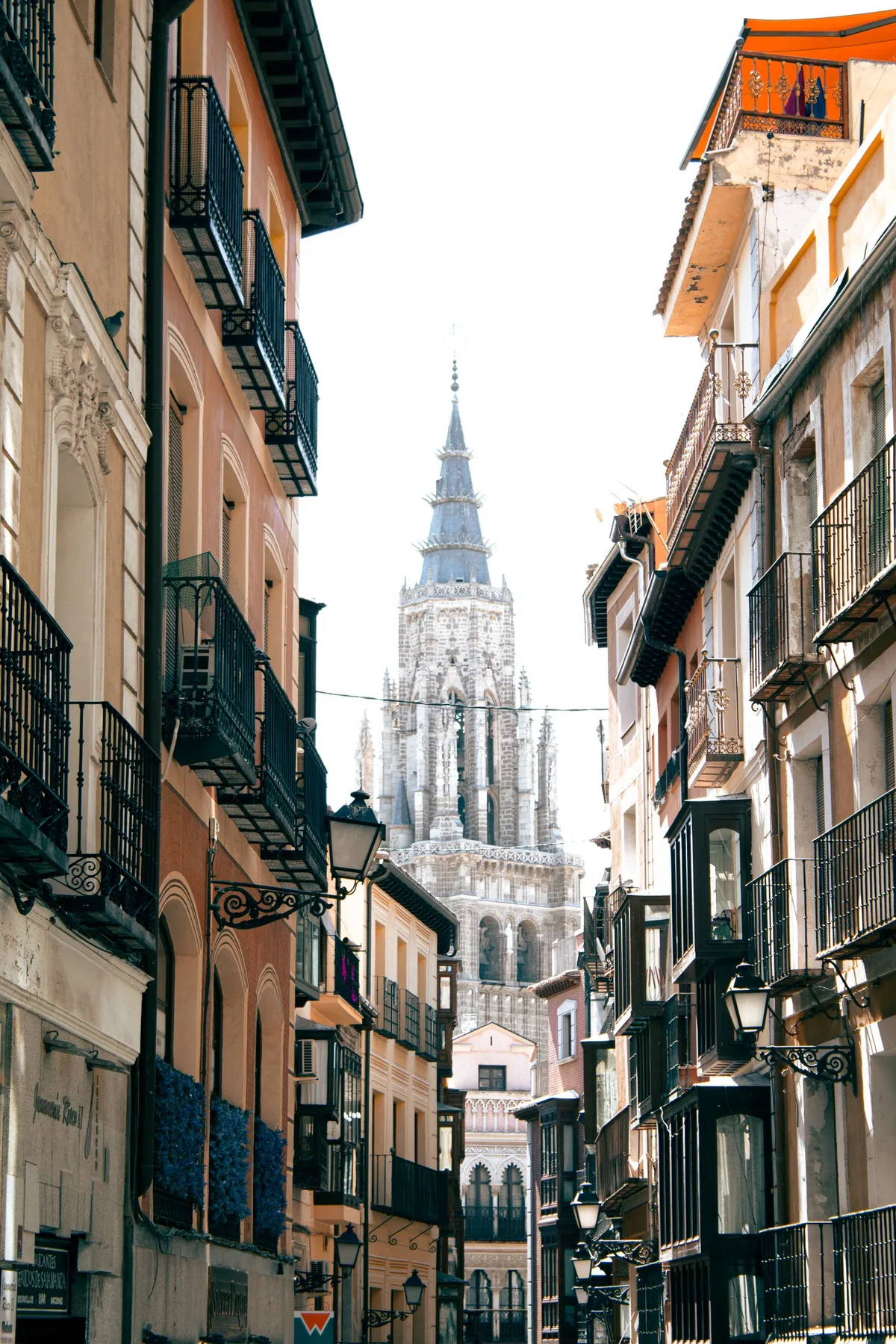
One of Spain's great Gothic cathedrals, built between the 13th and 15th centuries on the site of the city's former main mosque. Its imposing interior brings together artworks from every era, from Gothic to Baroque, including the spectacular Transparente by Narciso Tomé, a sculptural-architectural masterpiece that uses an oculus in the vault to flood the altar with natural light. The sacristy also houses a notable painting collection, with canvases by El Greco, Goya and Velázquez.
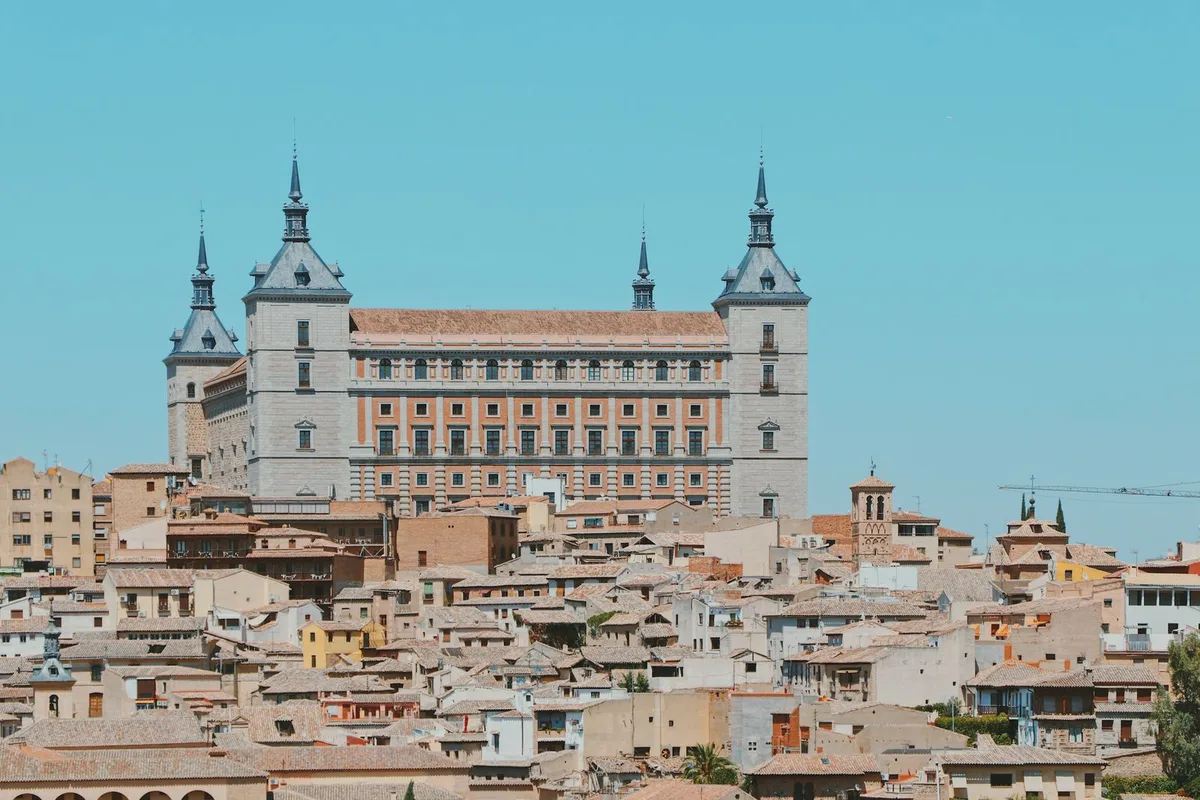
A fortress that dominates the city's skyline from its highest point, occupying a strategic site already used by Romans and Visigoths before the current building was constructed. Rebuilt several times after successive fires and sieges — most famously during the Spanish Civil War — it today houses the Army Museum, with a complete collection of weapons, uniforms and historical models. Its walls also offer one of the best panoramic views of Toledo and the Tagus River, which encircles the city like a natural moat.
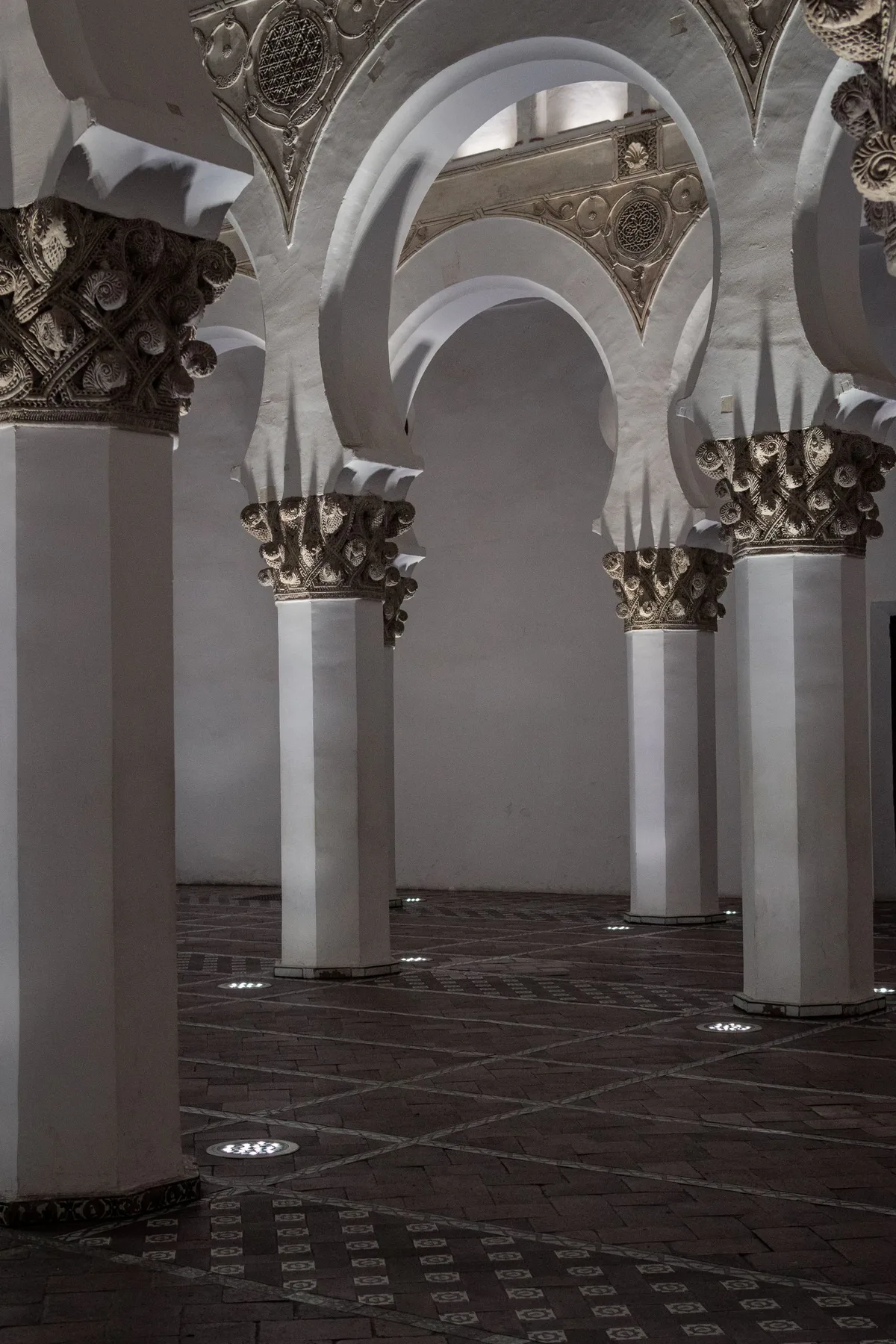
An exceptional example of Mudéjar architecture and of the Jewish legacy in the city, built in the 12th century as a synagogue by Muslim craftsmen in the service of the thriving Jewish community of Toledo. Its Almohad-inspired horseshoe arches, supported by octagonal columns topped with capitals decorated with pinecones and plant motifs, create a space of unusual serenity. Converted into a church after the expulsion of the Jews in 1492, it retains its original structure intact and is today one of the most eloquent testimonies to the coexistence of Toledo's "three cultures."
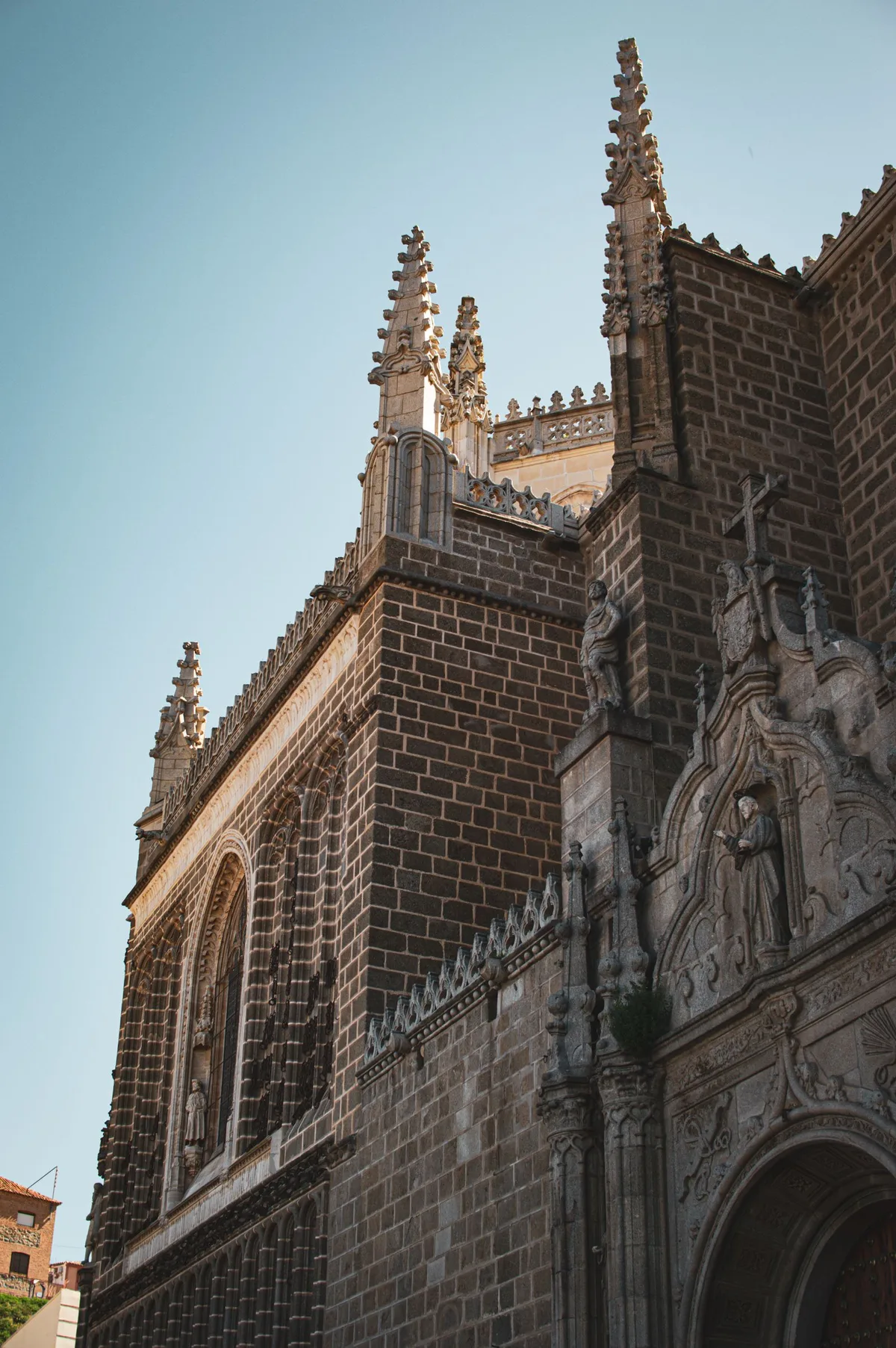
Here hangs "The Burial of the Count of Orgaz," one of El Greco's masterpieces and one of the reasons many travellers make their way to Toledo. Painted in 1586 for this very church, the canvas depicts, in near-documentary fashion, the moment Saint Stephen and Saint Augustine descend miraculously from heaven to bury the Toledan nobleman, dividing the composition between an earthly register filled with portraits of the era's nobility and a celestial one in ethereal colours. The painter himself included his self-portrait among the mourners.
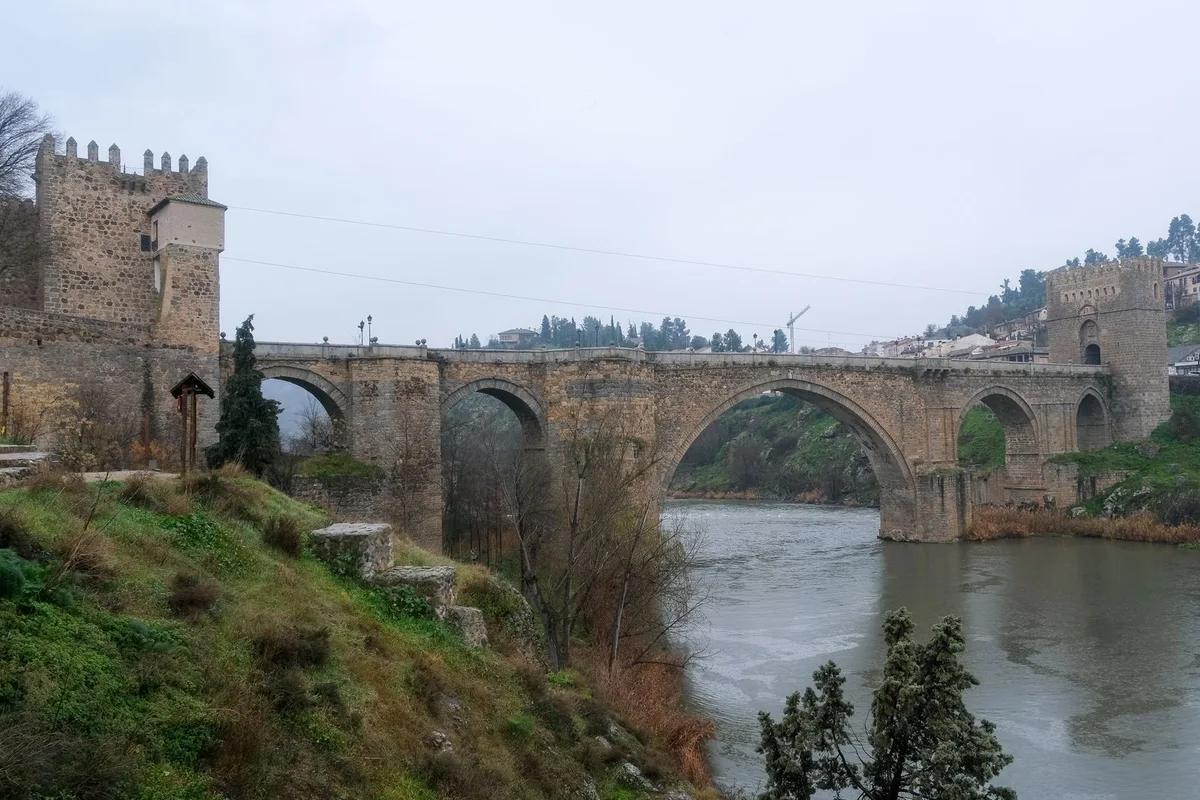
A medieval bridge over the Tagus River with spectacular views of the old town, built in the 14th century to replace an earlier bridge destroyed by a flood. Its fortified towers at both ends recall that for centuries it was one of the few controlled access points to the city. Crossing it on foot, with the Tagus winding below and Toledo rising on the hill opposite, is the best way to understand why the city was considered, for centuries, a virtually impregnable fortress.
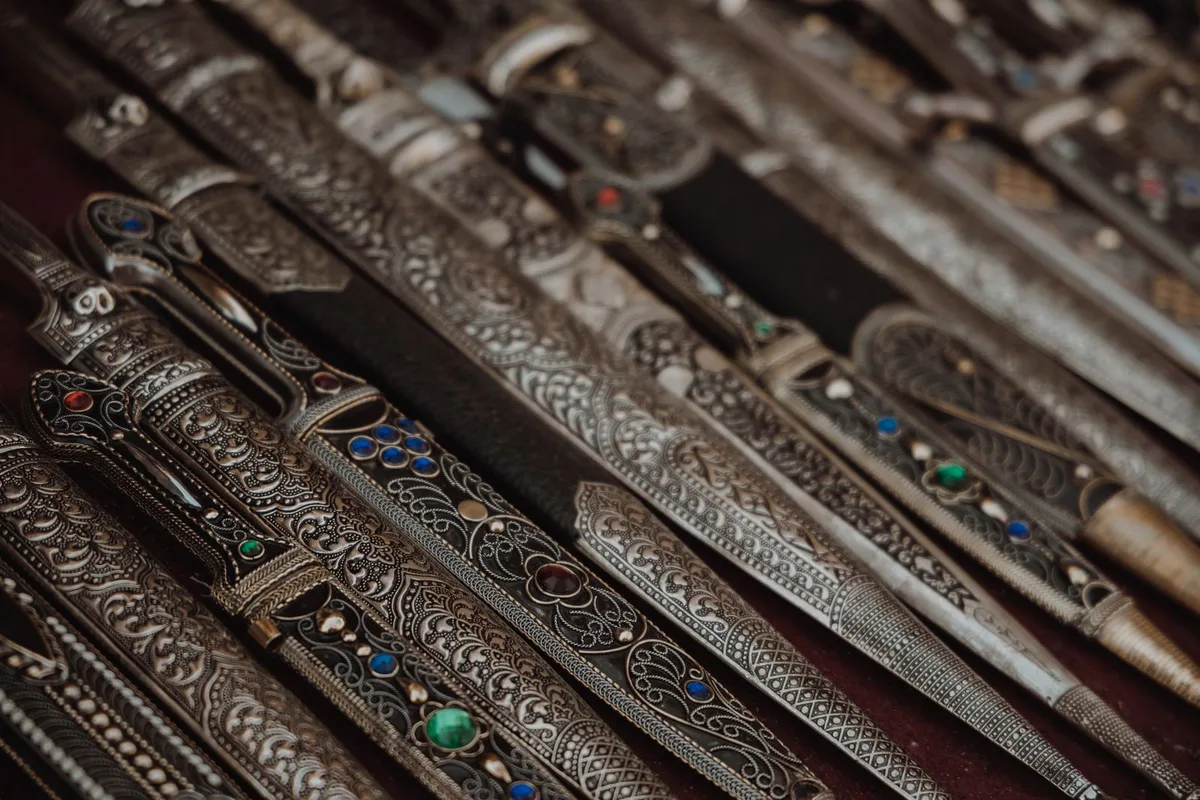
Toledo has been forging steel since Roman times, when it was already famed for the quality of its weapons, and it reached its peak during the centuries of Muslim and Christian rule, when swordsmen from across Europe sought out "Toledo steel." The technique of damascening — inlaying threads of gold and silver onto blackened iron to create intricate geometric patterns — is still practised today exactly as it was centuries ago. Visiting a traditional workshop means discovering a craft that remains very much alive, with pieces exported to collectors and museums around the world.
Toledo is known as the "City of the Three Cultures" for the historic coexistence of Christians, Muslims and Jews.
Its entire old town has been a UNESCO World Heritage Site since 1986.
Toledo has been a cradle of steel since Roman times, and its handcrafted swords are still exported today, including some used in films such as "The Lord of the Rings."
The painter El Greco adopted Toledo as his home and made it the protagonist of many of his works.
The Tagus River wraps around the city in a near-closed bend, turning it into a natural fortress.
Toledo marzipan, of convent origin, is a local sweet still made by hand today as it has been for centuries, especially at Christmas.
A private guide, handpicked hotels and skip-the-line access to every one of these sites.
Toledo is a perfect getaway within any of our Spain and Portugal circuits.