Spain
Salamanca Travel Guide — University, Plaza Mayor & Private Tours
The quintessential university city, where knowledge has spent eight hundred years lighting up the golden stone of its façades.
The quintessential university city, where knowledge has spent eight hundred years lighting up the golden stone of its façades.
Salamanca is a city that studies, celebrates and glows gold every evening — and has been doing so, without interruption, since the 13th century.
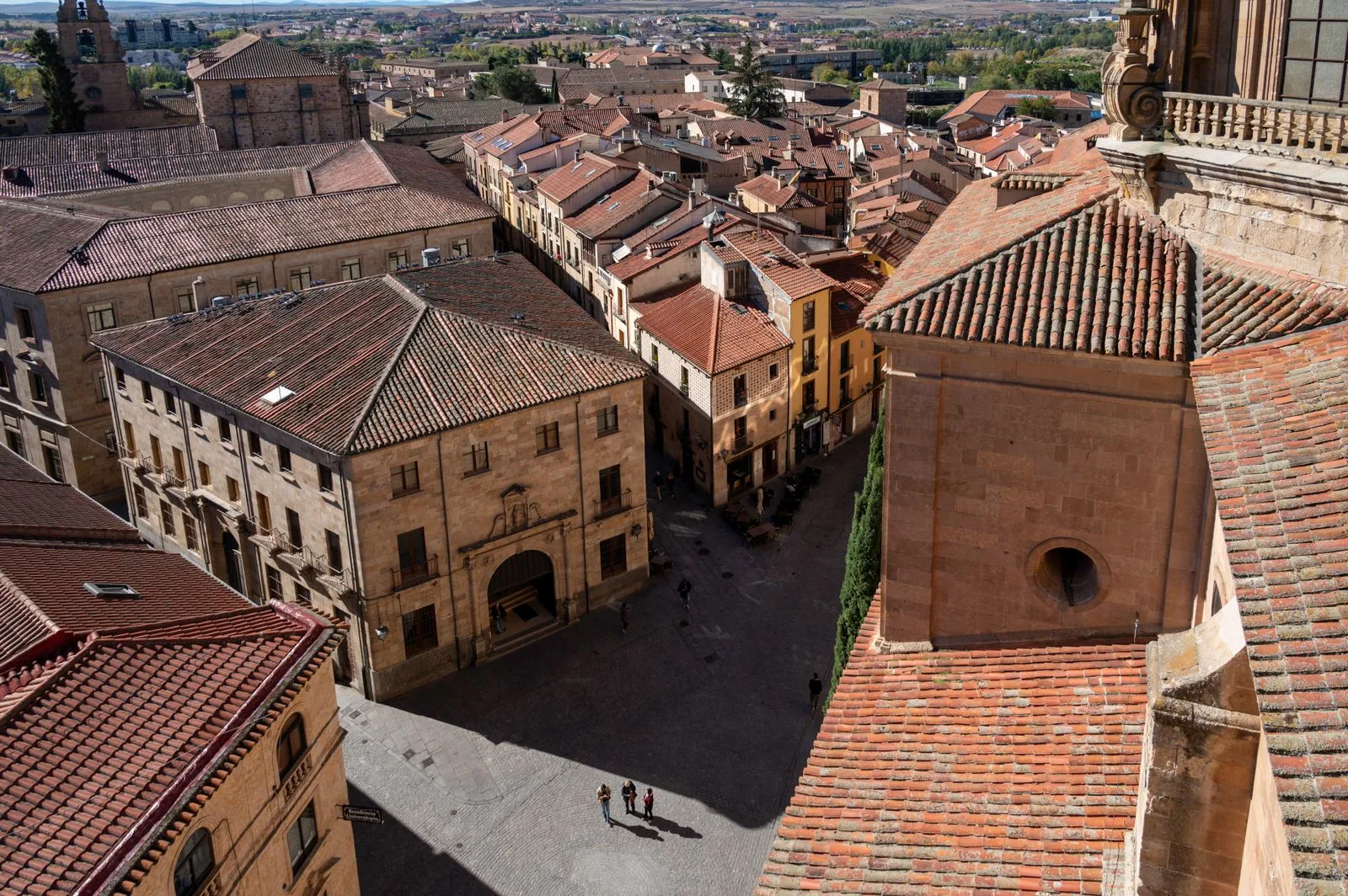
Few Spanish cities convey an atmosphere as singular as Salamanca: the youthful buzz of one of Europe's oldest universities living side by side with first-rate monumental heritage, all wrapped in the warm colour of Villamayor stone, which shifts tone with the daylight until it turns the entire city into a spectacle at sunset.
Its Plaza Mayor, considered one of the most beautiful in Spain, is the social heart of the city, and its university — with the legendary frog hidden in the plateresque façade — turns any walk into a hunt for details and legends. Salamanca is compact, walkable and full of student life, ideal for a getaway that blends art, history and atmosphere.
Of pre-Roman and Roman origin — when it was known as Salmantica — the city stood on the historic Vía de la Plata, the great route linking the north and south of the peninsula. But the milestone that defined its destiny came in 1218, when Alfonso IX of León founded the University of Salamanca, one of the oldest in the world and the oldest in the Spanish-speaking world.
Between the 15th and 17th centuries, Salamanca lived through its university golden age, with figures of the stature of Fray Luis de León, and it is said that Christopher Columbus defended his project to sail to the Indies here before a panel of scholars. That intellectual ferment left an architectural and cultural imprint that still defines the city today.
The current Plaza Mayor was built in the 18th century, after the 1755 Lisbon earthquake, and immediately became the nerve centre of Salamanca's social life — a role it still holds intact today.
A selection no Viavora itinerary ever skips.
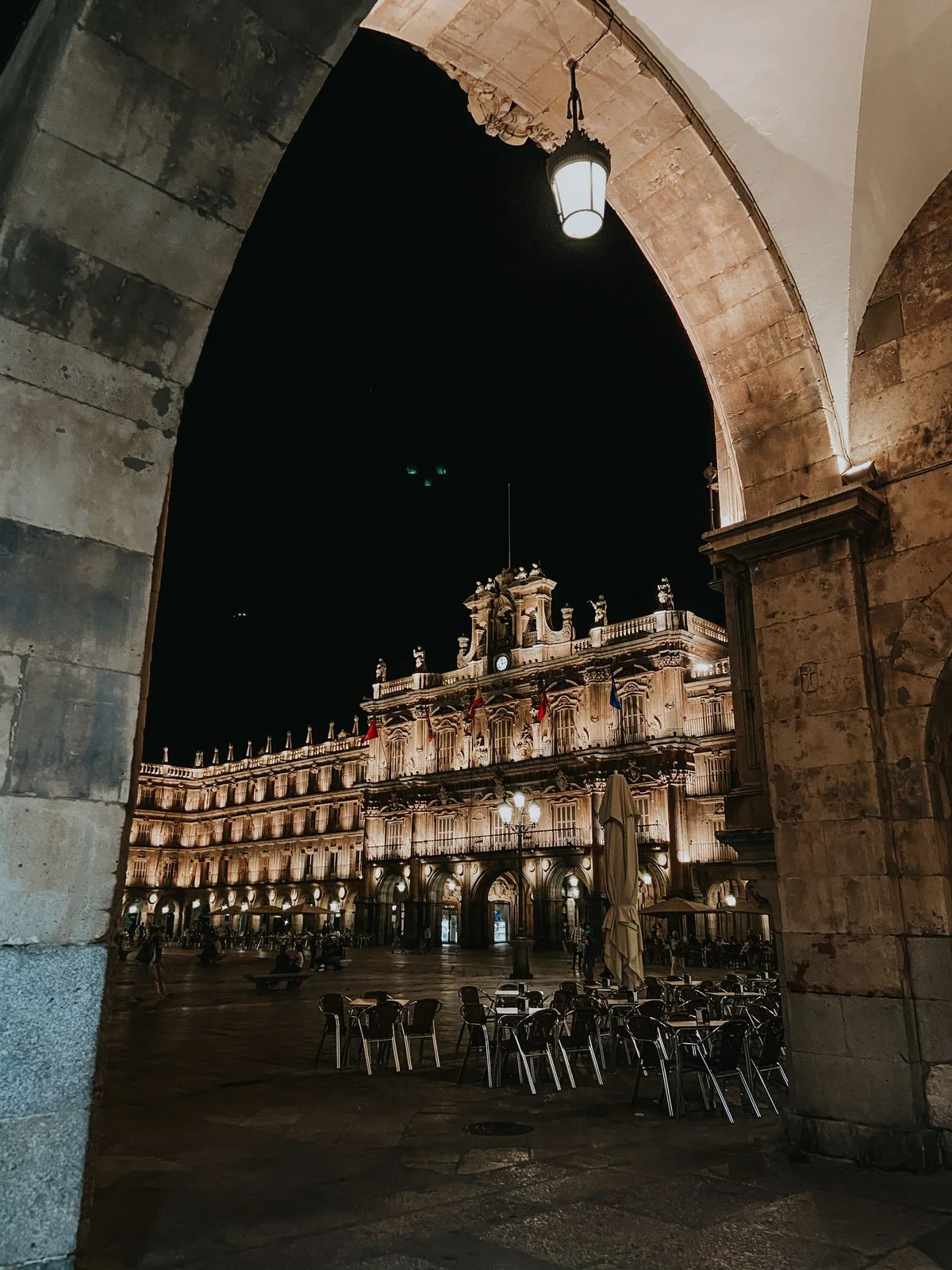
Considered one of the most beautiful squares in Spain, it was built in the 18th century by Alberto de Churriguera as a stage for bullfights and public events, and today remains the city's foremost meeting point. Its arcades house century-old cafés, and its stone medallions portray kings, conquistadors and illustrious figures from Spanish history. Especially lively at dusk, when the golden stone lights up and the square fills with students, it is one of the most harmonious urban spaces in all of Europe.
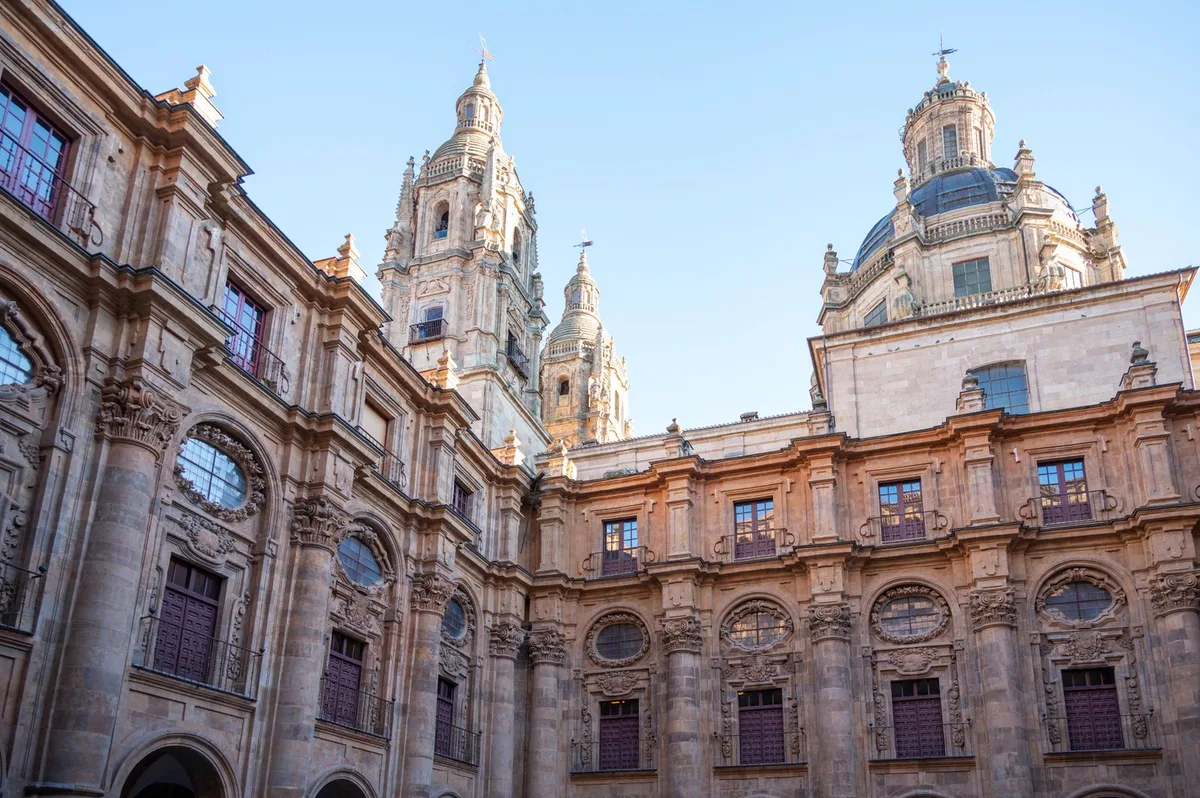
Founded in 1218, it is the oldest operating university in Spain and one of the oldest in the world, the cradle of figures such as Fray Luis de León and Antonio de Nebrija, author of the first Castilian grammar. Its plateresque façade, a tapestry of stone carved with almost goldsmith-like precision, is a work of art in itself, and hides the famous lucky frog among its reliefs — finding it unaided is almost a rite of passage for students and visitors, and tradition holds it brings good luck in exams to whoever manages it.
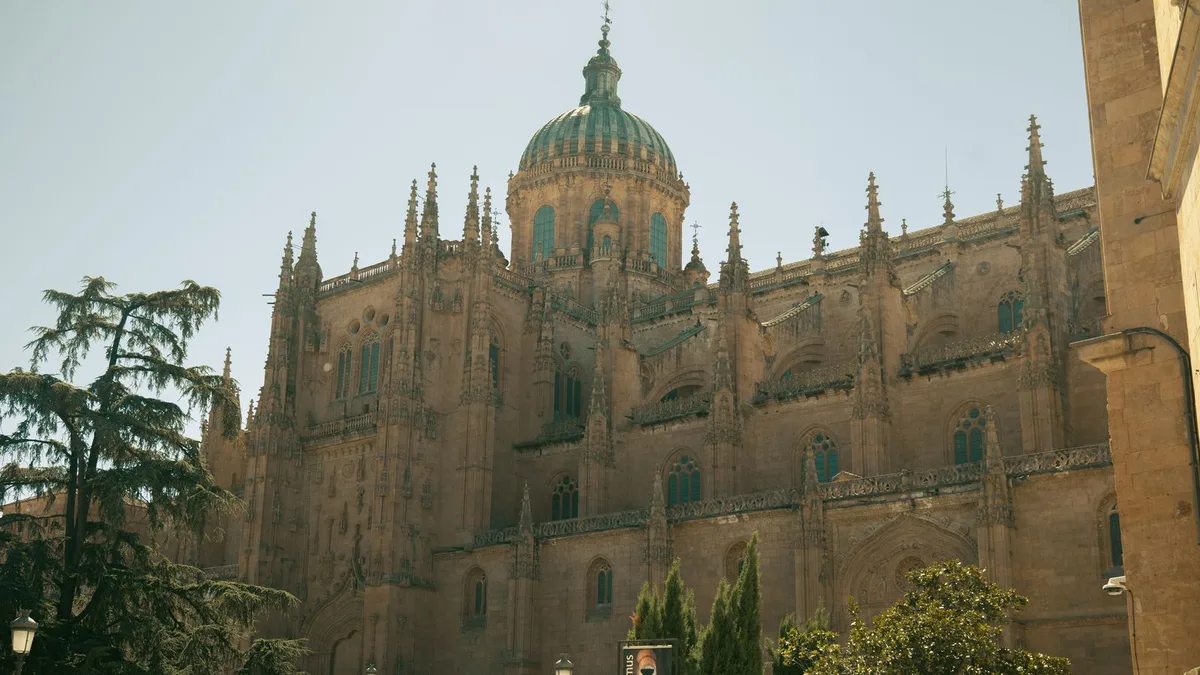
Two cathedrals joined in a single complex: the Old Cathedral, Romanesque and dating from the 12th century, with its distinctive Torre del Gallo, and the New Cathedral, an imposing Gothic-Renaissance building constructed between the 16th and 18th centuries when the first proved too small for the growing university city. Together they let visitors trace several centuries of Spanish religious architecture in a single visit, and their façades hide curious details, such as an astronaut and a dragon eating an ice cream carved by 20th-century restorers.
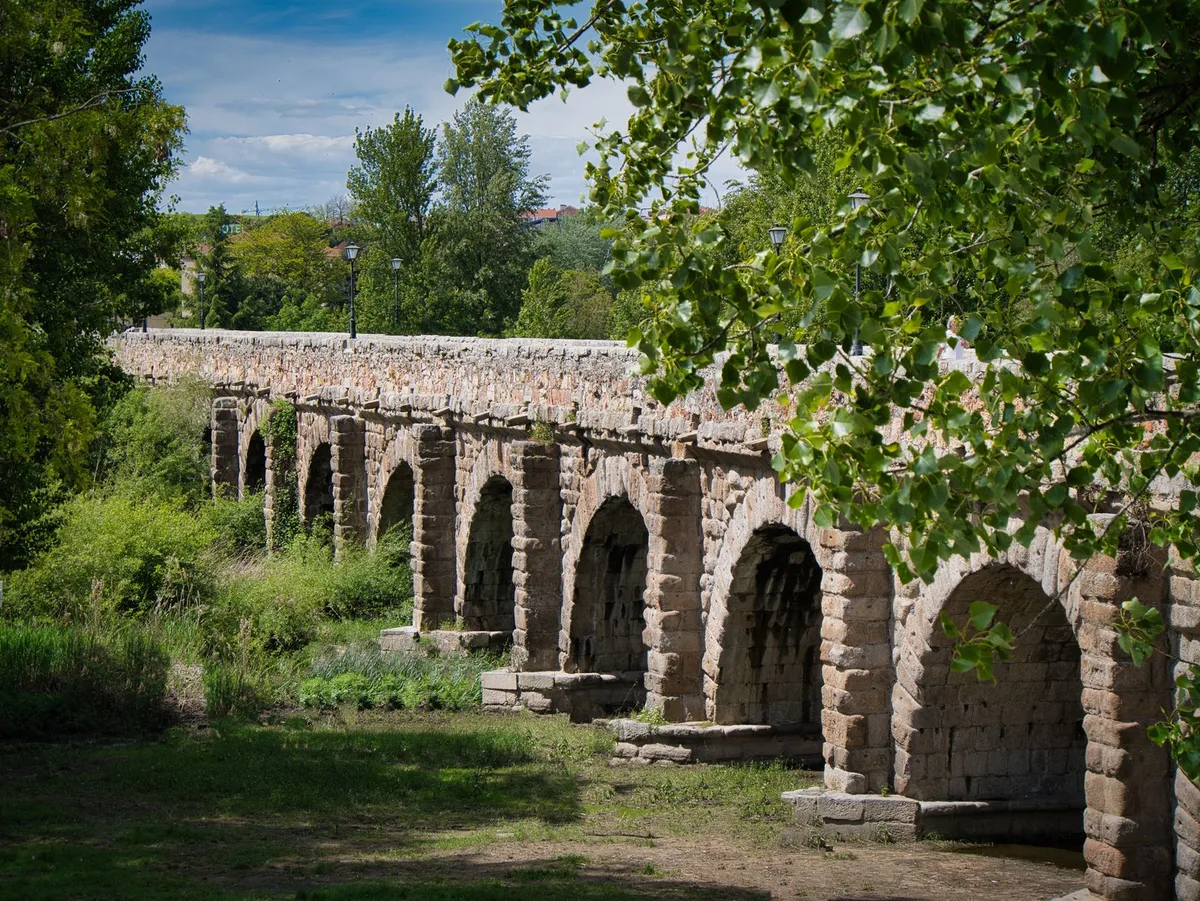
A bridge of Roman origin dating from the 1st century, with 26 arches — though only 15 retain their original stonework — which for nearly two thousand years has been the main entrance to the city from the south. Guarded at its access by an Iberian sculpture known as "el verraco," it offers one of the finest panoramic views of the city's golden skyline, with the New Cathedral rising above the rooftops and the Tormes river reflecting the Villamayor stone at sunset.
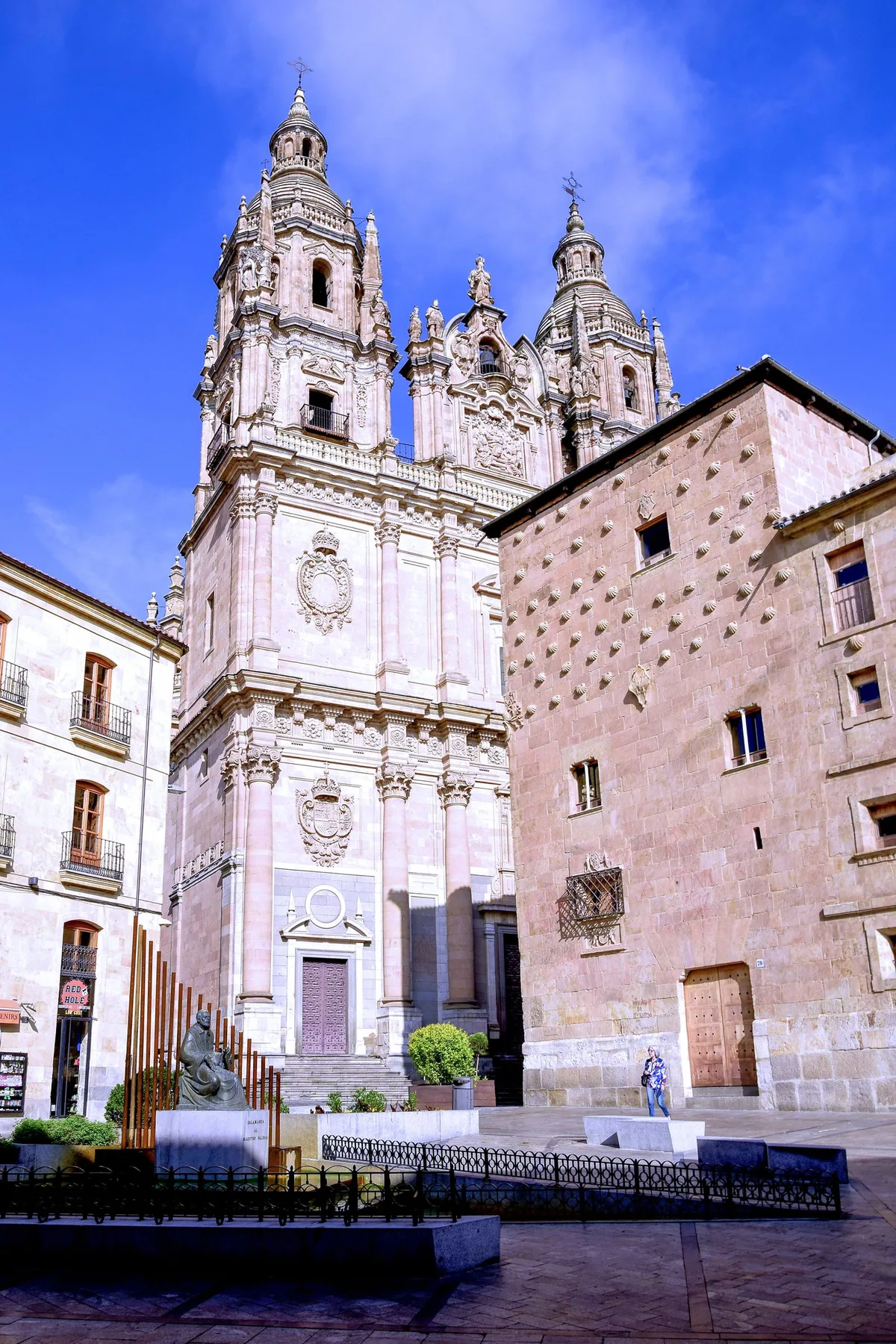
A 15th-century Gothic-plateresque building covered with more than 300 stone-carved shells, commissioned by a knight of the Order of Santiago — whose emblem is precisely the shell — as a display of his rank. Its façade, between Isabelline Gothic and the earliest traits of plateresque style, combines flamboyant window tracery with exceptionally fine Mudéjar ironwork. Today it houses a public library, and is one of Salamanca's most photographed landmarks alongside the University.
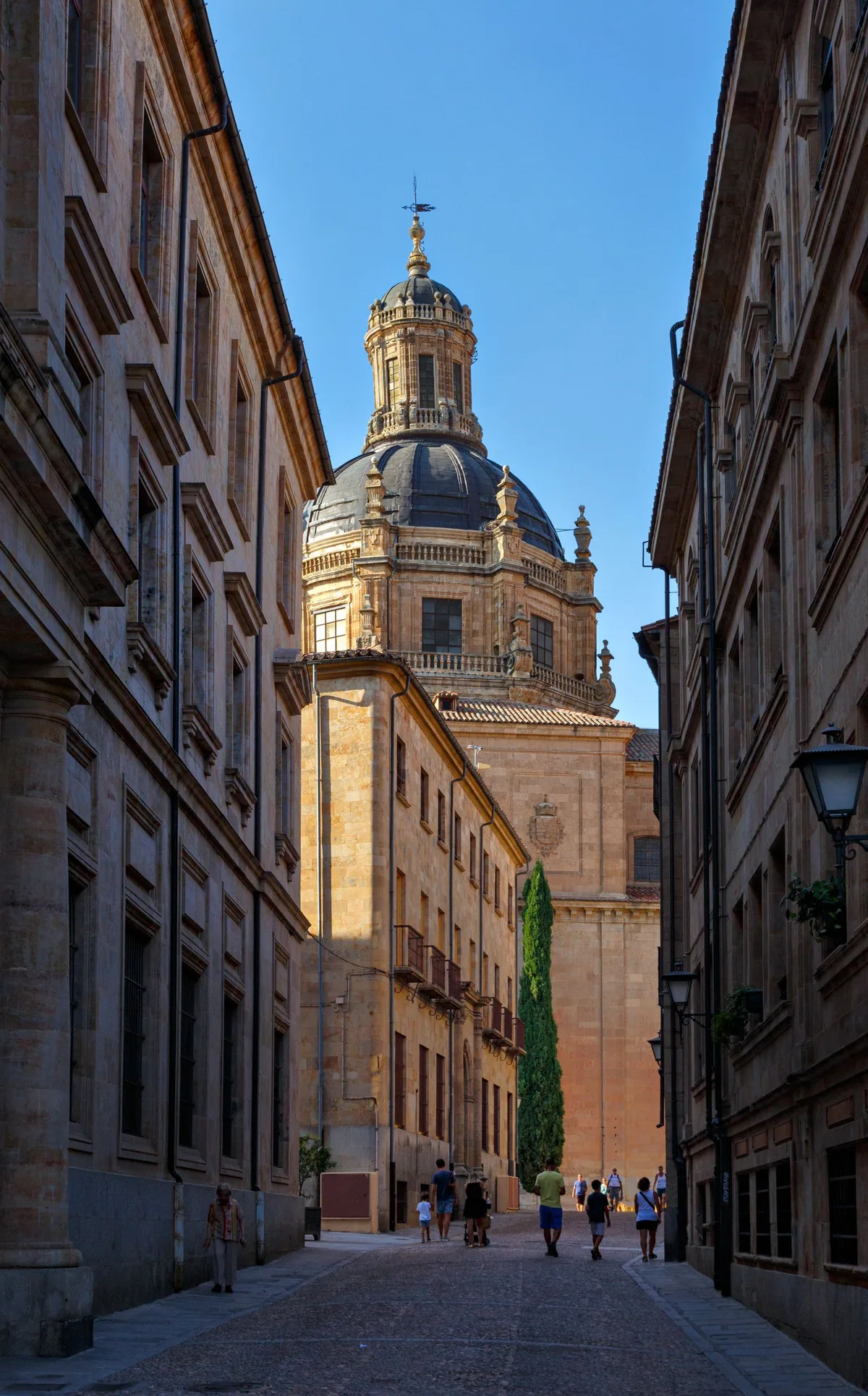
Salamanca breathes youth thanks to its university, which for eight centuries has drawn students from across Spain and the world, making the city one of the liveliest in Castile and León despite its relatively modest size. Its streets around Plaza Mayor and the Oeste district are packed with a lively scene of bars, tapas and gatherings that runs well into the night, with a student atmosphere that contrasts with — and lives in perfect harmony alongside — the city's monumental weight.
The University of Salamanca, founded in 1218, is the third-oldest university in Europe still in operation.
A tiny frog is carved on a skull in its plateresque façade — finding it unaided is said to bring good luck in exams, according to student tradition.
It is said that Christopher Columbus defended his project to sail to the Indies here before a panel of scholars.
The golden colour so characteristic of its buildings comes from Villamayor stone, which changes tone with the daylight.
Salamanca's Plaza Mayor remains, to this day, the social and meeting centre of the entire city.
Salamanca is home to one of Europe's largest Spanish-language programmes for foreigners, giving it a distinctive international atmosphere all year round.
A private guide, handpicked hotels and skip-the-line access to every one of these sites.
Salamanca is an essential stop on any of our Spain and Portugal circuits.