Spain
Zaragoza Travel Guide — Basílica del Pilar, Aljafería & Private Tours
The city that sums up three thousand years of Spanish history in a single walk along the Ebro.
The city that sums up three thousand years of Spanish history in a single walk along the Ebro.
Zaragoza is the city where Rome, Islam and Christian Spain coexist on every corner, on the banks of a river that has seen it all.
Sitting almost exactly halfway between Madrid and Barcelona, Zaragoza has been an obligatory crossroads for two thousand years — and that crossroads spirit shows in every corner of its old town. Here, just metres apart, stand the remains of the Roman colony of Caesaraugusta, the Islamic splendour of the Aljafería and the imposing silhouette of the Basílica del Pilar, one of the great Marian shrines of the Catholic world.
It is a city that surprises with its gentle scale and unhurried pace, ideal for exploring on foot over a couple of days, with a tapas scene around El Tubo that has nothing to envy other Spanish capitals. Zaragoza is the perfect stop for anyone seeking historical depth without the crowds of the big destinations.
Zaragoza was founded as a Roman colony in 14 BC by the Emperor Augustus, who gave it the name Caesaraugusta — from which, after centuries of phonetic evolution, the city's current name derives. The remains of that Roman city, with its forum, baths and theatre, keep surfacing beneath the streets of the old town.
After the Visigothic period, the city became the Muslim taifa of Saraqusta, a prosperous al-Andalus kingdom that left behind the Aljafería Palace as its legacy, until its reconquest in 1118 by Alfonso I "the Battler". According to Catholic tradition, it is also in Zaragoza that the Virgin appeared to the apostle James upon a pillar, giving rise to the Basílica del Pilar, considered the first Marian temple in history.
Centuries later, during the Peninsular War, the city wrote one of the most heroic chapters in Spanish military history: the Sieges of Zaragoza (1808-1809), a numantine resistance against Napoleonic troops that turned its inhabitants, and especially Agustina de Aragón, into a symbol of popular courage.
A selection no Viavora itinerary ever skips.
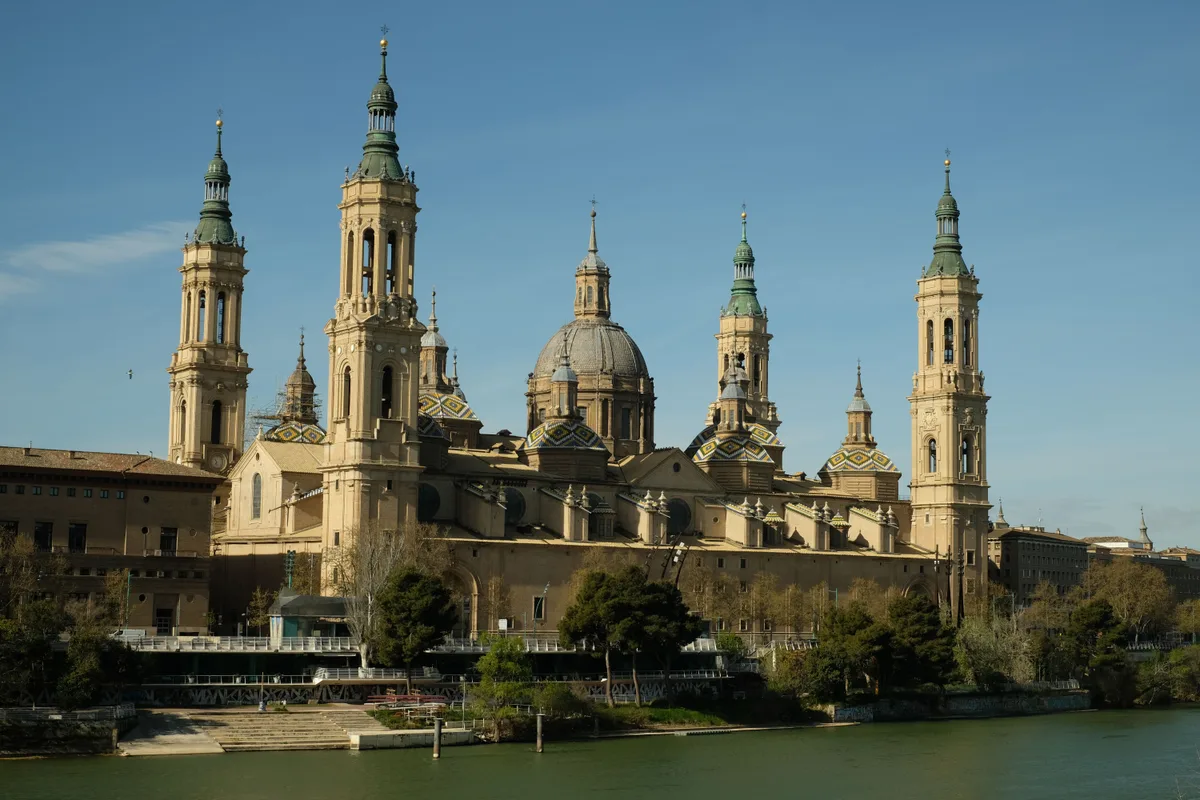
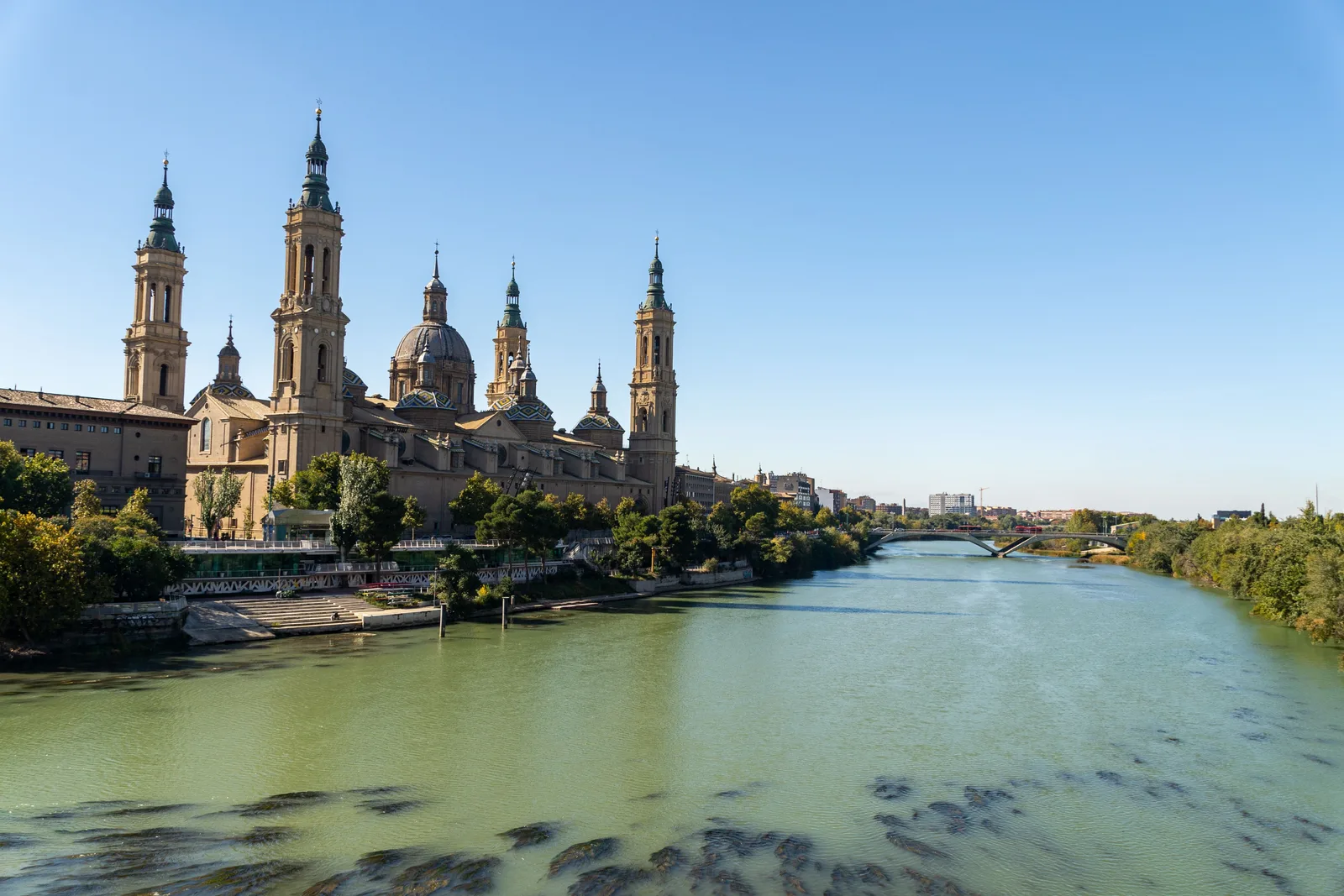
On the banks of the Ebro, this is the great symbol of the city and, according to Catholic tradition, the first Marian temple in history: legend has it that the Virgin appeared here to the apostle James upon a jasper pillar that visitors can still kiss inside the temple today. With its eleven glazed-tile domes and four towers, the basilica's silhouette dominates Zaragoza's skyline from any angle, and every October the entire city throws itself into the Fiestas del Pilar, one of Spain's most crowded celebrations.
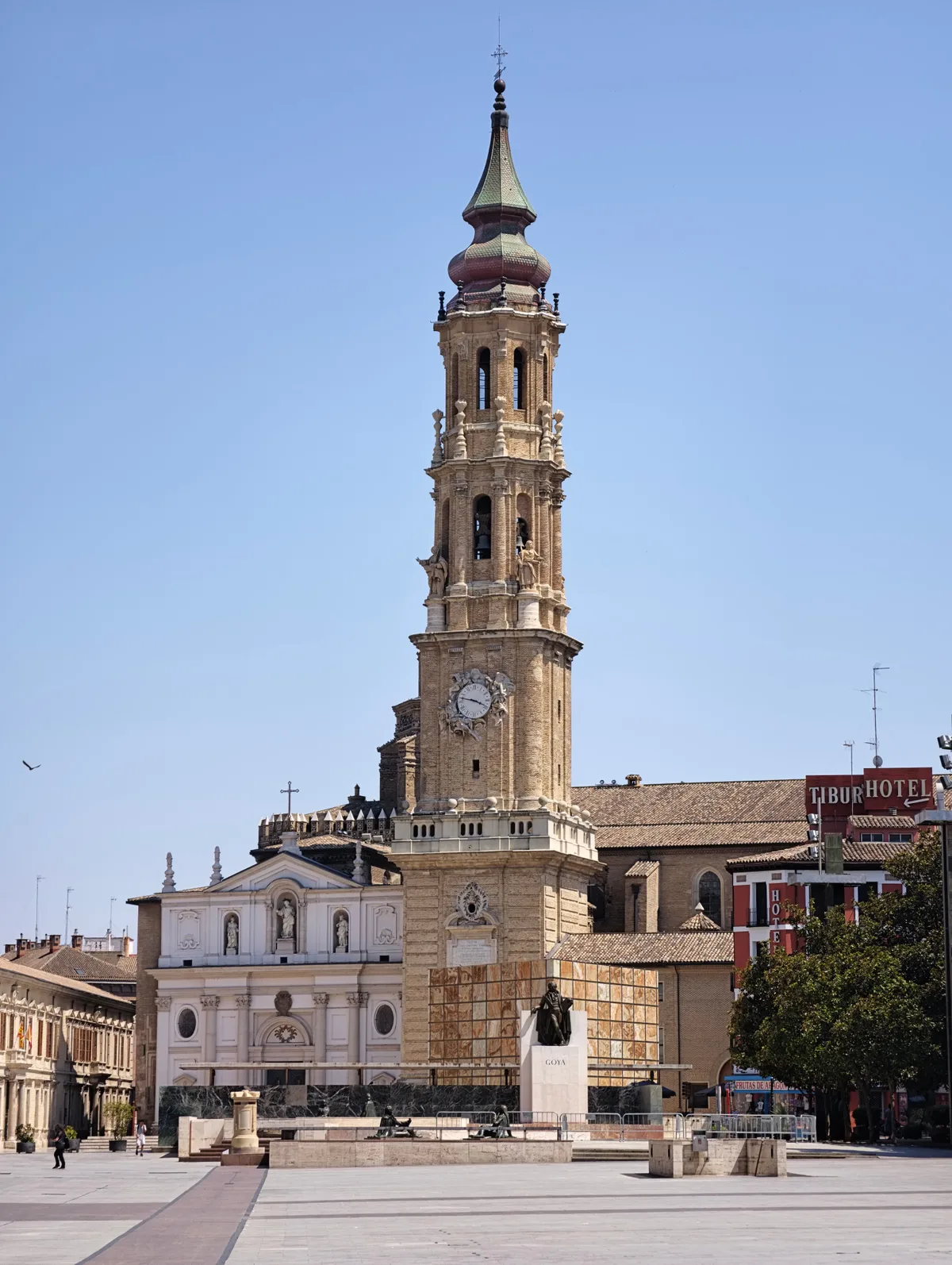
Facing the Basílica del Pilar, this cathedral, built over the former main mosque of Muslim Zaragoza, blends Romanesque, Mudéjar, Gothic and Baroque styles in a single building, a living testimony to the many eras the city has passed through. Its Tapestry Museum holds one of Europe's finest collections of Gothic and Renaissance tapestry, and its Mudéjar tower, built in brick and glazed ceramic, is a World Heritage Site as part of the Mudéjar Architecture of Aragon.
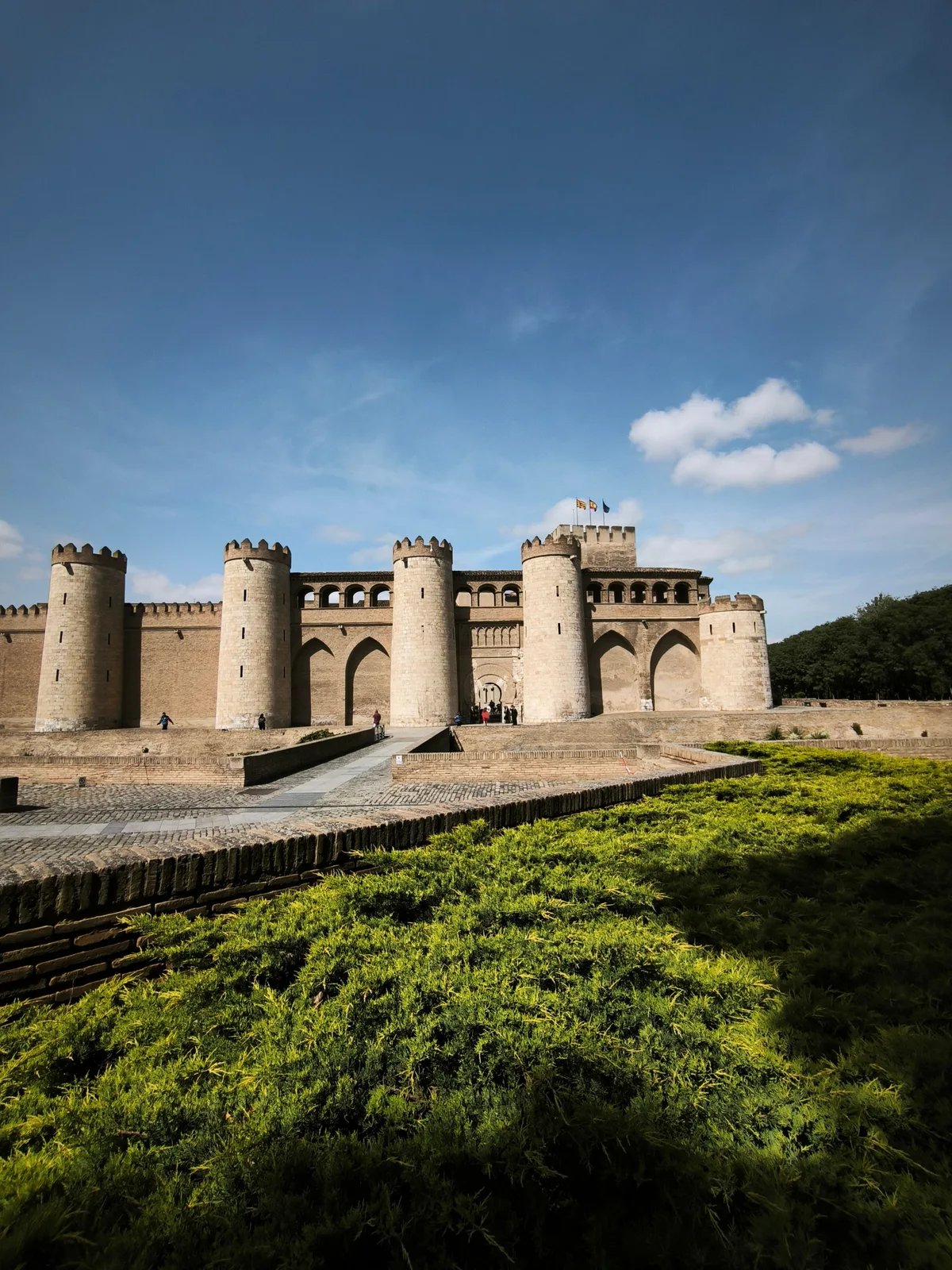
An 11th-century Islamic fortress declared a World Heritage Site, it is one of the few great al-Andalus palaces preserved in Spain outside Andalusia, built when Zaragoza was the capital of a prosperous independent taifa kingdom. Its courtyards and lobed arches, with plasterwork decoration comparable to that of Córdoba or Granada, are of exceptional beauty. After the Christian conquest it became the residence of the kings of Aragon, and today it also houses the Aragonese Parliament, combining eight centuries of Spanish political history in a single building.
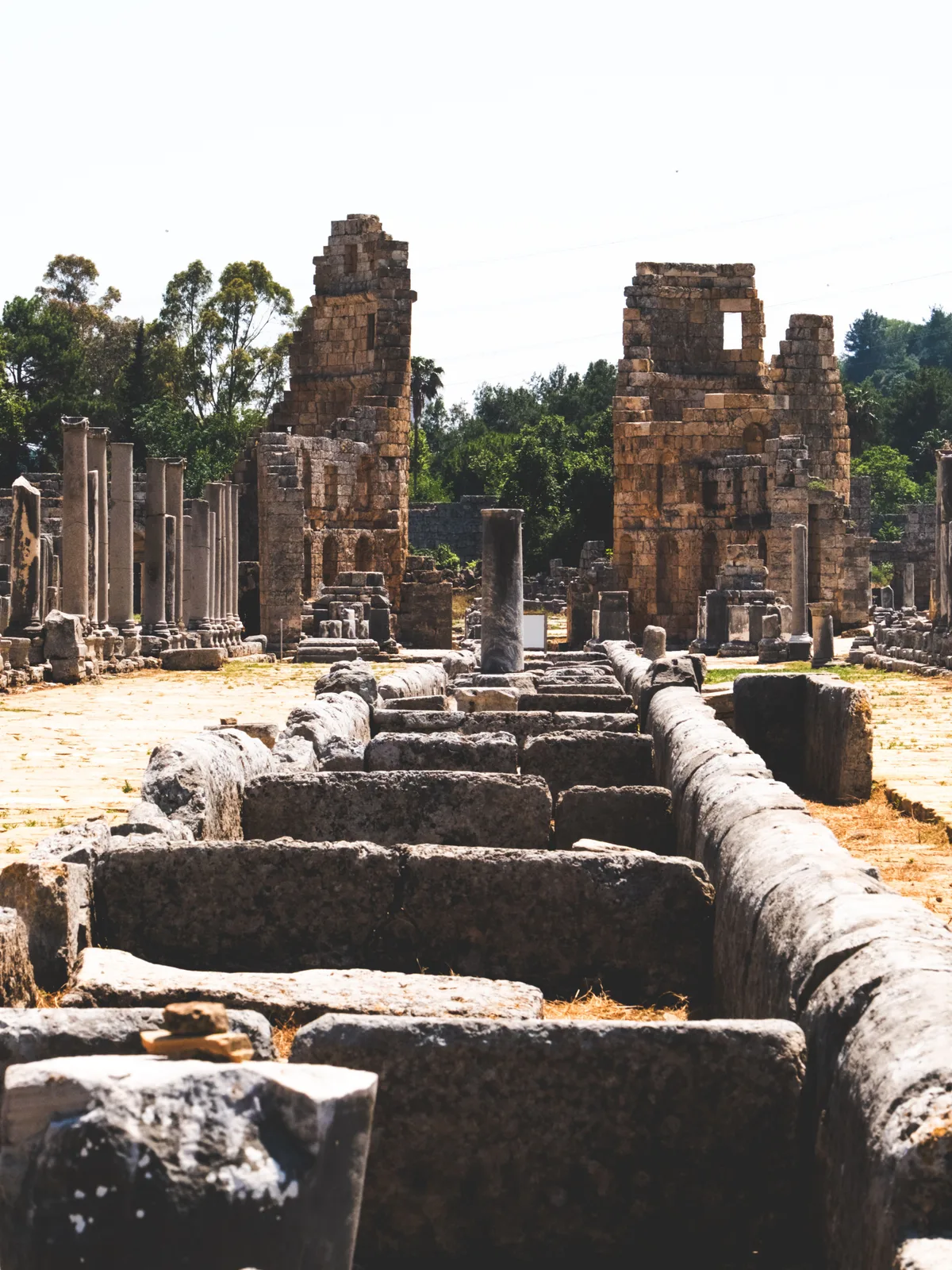
Beneath the streets of the historic centre lie the remains of the forum, public baths, theatre and river port of ancient Caesaraugusta, the Roman colony founded by the Emperor Augustus that gave today's Zaragoza its name. The four sites, turned into museums and woven into the modern urban fabric, allow visitors to trace, in a single day, the everyday, commercial and leisure life of a provincial Roman city — an archaeological route unique in Spain for its extent and state of preservation.
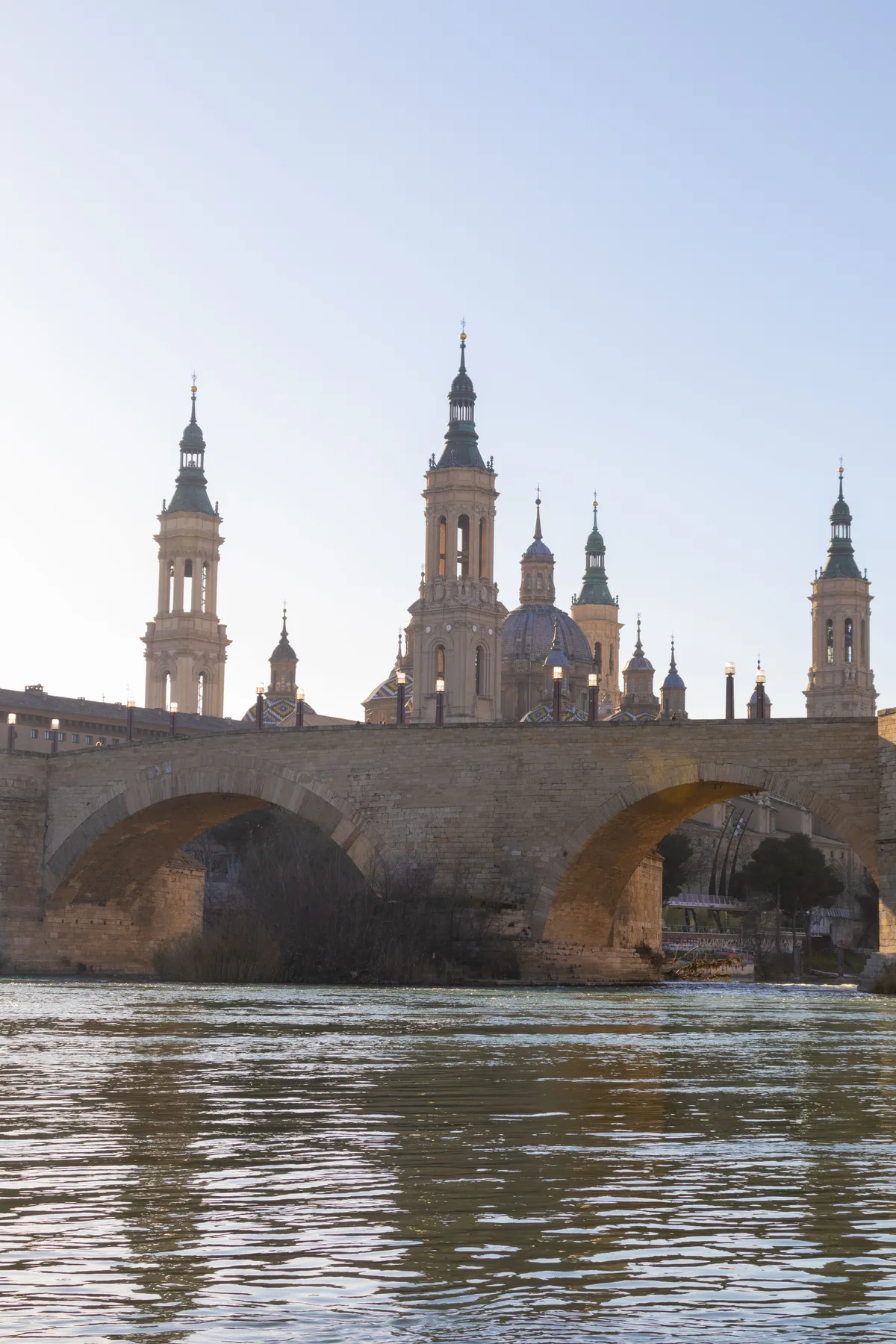
The historic bridge crossing the Ebro and linking the old town with the Arrabal district, built in stone in the 15th century on the foundations of an earlier Roman bridge, and rebuilt several times over the centuries after the river's floods. Popularly known as "the bridge of the Lanuzas", it offers one of the best views of the Basílica del Pilar at sunset, when the golden light illuminates its domes and reflects on the waters of the Ebro.
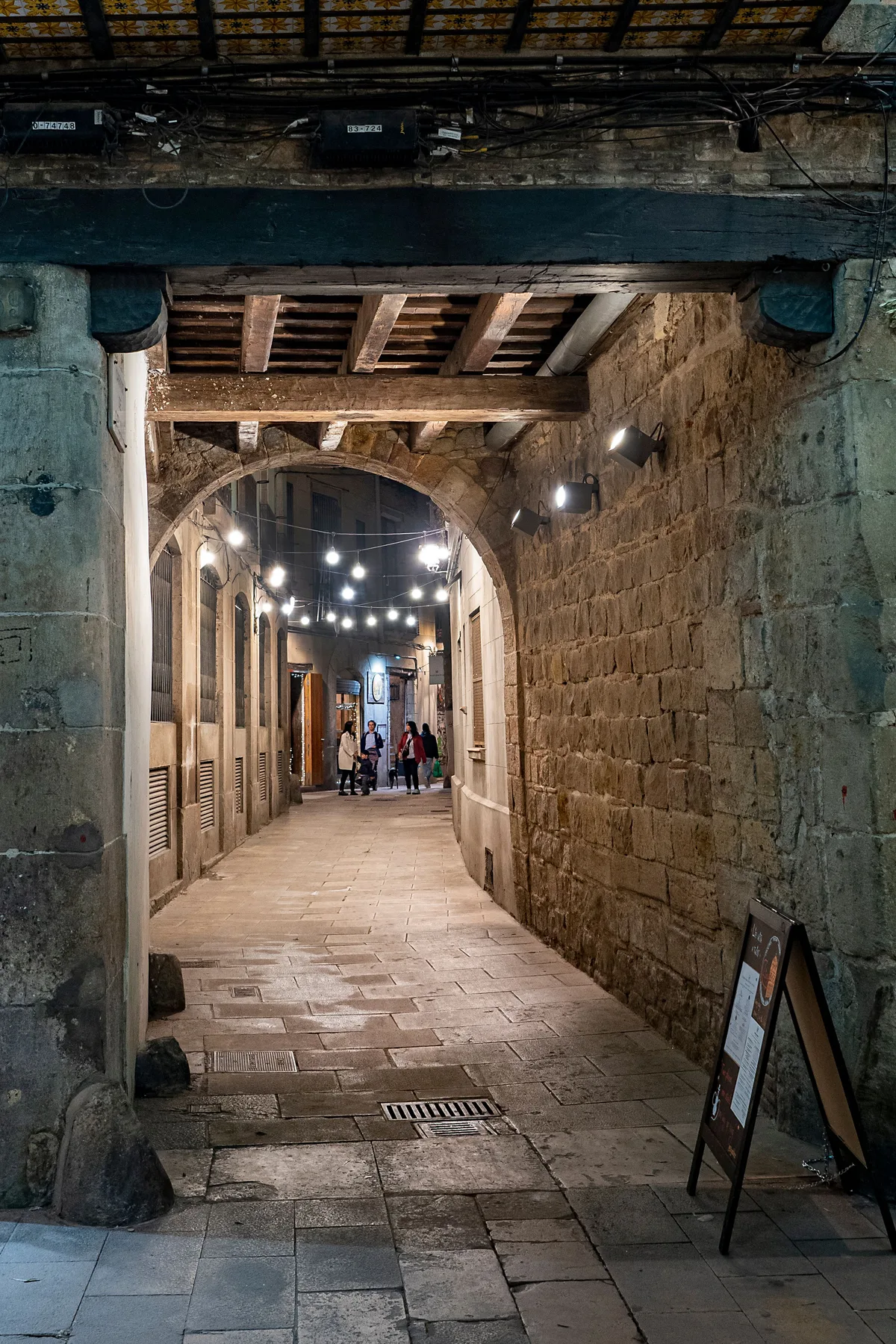
The maze of narrow streets in the old town where the city's best tapas route is concentrated, with century-old bars standing side by side with modern kitchens, each specialising in a particular tapa that has made the house famous for generations. Bar-hopping at sunset, with a beer and a tapa at every stop, is a must for any visitor and the best way to understand Zaragoza's sociable, lively character.
The name "Zaragoza" is a direct phonetic evolution of the Roman name Caesaraugusta, given in honour of the Emperor Augustus.
According to Catholic tradition, the Basílica del Pilar is the first Marian temple in history, built after the Virgin appeared to the apostle James.
The Aljafería is one of the few great Islamic palaces preserved in Spain outside Andalusia, and today the seat of the Aragonese Parliament.
During the Sieges of Zaragoza (1808-09), the city heroically withstood the Napoleonic siege, inspiring the legend of Agustina de Aragón.
Zaragoza sits almost exactly halfway between Madrid and Barcelona, making it a natural stop on any great Iberian route.
The Fiestas del Pilar, held every October, are among Spain's most crowded celebrations, with the famous flower offering to the Virgin as its highlight.
A private guide, handpicked hotels and skip-the-line access to every one of these sites.
Zaragoza is the perfect stop on any of our great Spain and Portugal circuits.