China
Xi'an Travel Guide — Terracotta Warriors, Silk Road & Private Tours
The capital of thirteen dynasties, where an army of eight thousand terracotta soldiers has stood silent guard for over two thousand years.
The capital of thirteen dynasties, where an army of eight thousand terracotta soldiers has stood silent guard for over two thousand years.
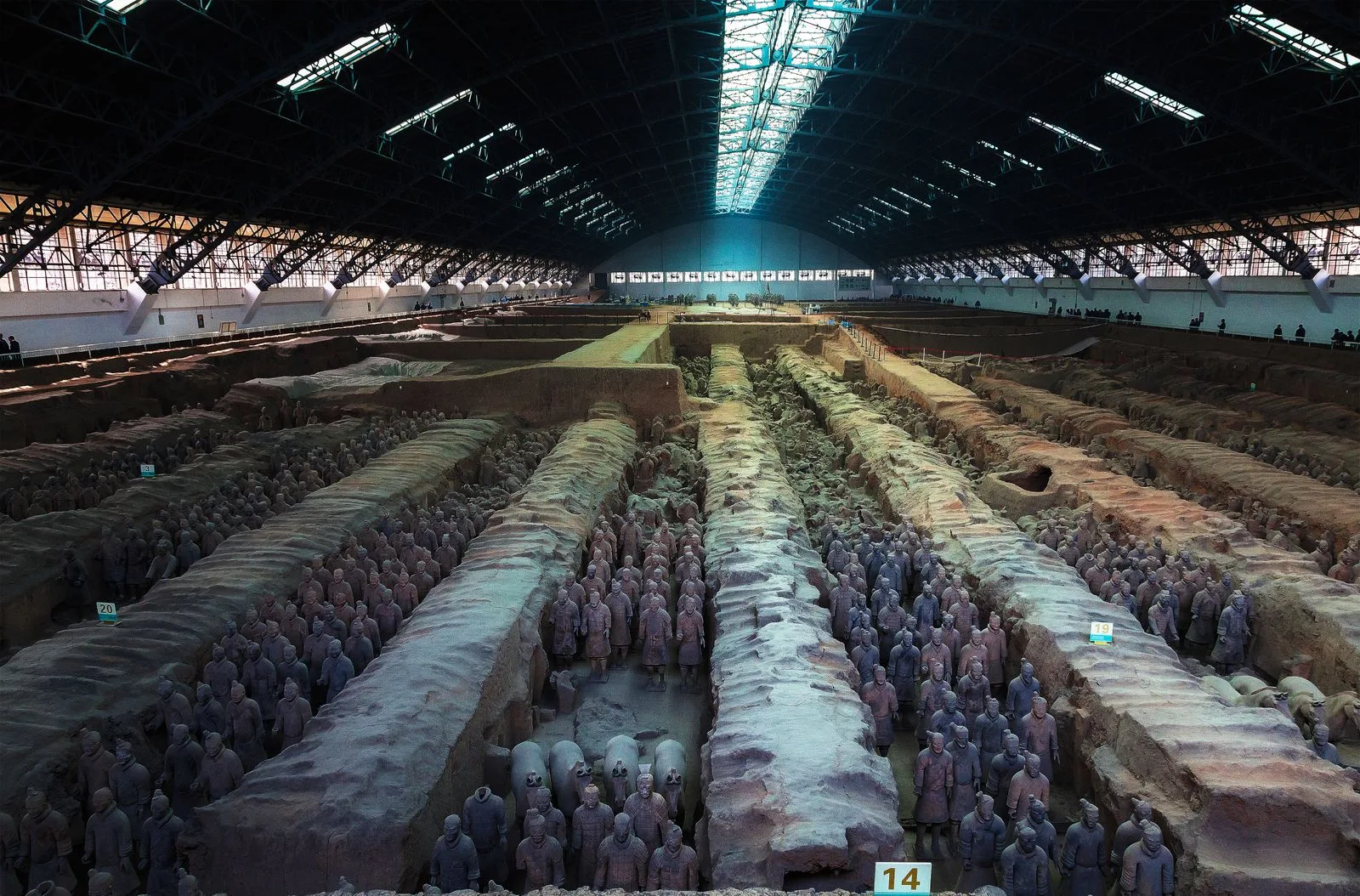
Xi'an holds one of the greatest archaeological discoveries in history: an entire terracotta army, silently guarding an emperor's eternity for more than two thousand years.
Few cities can claim to have been the capital of thirteen dynasties over more than 1,100 years — more than any other in all of China. Xi'an, the ancient Chang'an, was for centuries the starting point of the Silk Road, the great trade artery that connected China with Europe and the Middle East, and it grew to become the most populous and cosmopolitan city in the world.
Today, that legacy can be felt on every corner: in the Ming walls that still encircle the historic center, in the bustling Muslim Quarter with its night market, and above all in the Terracotta Army, discovered by accident in 1974 and now one of the most visited archaeological wonders on the planet. Xi'an is, quite simply, an essential stop for understanding the grandeur of imperial China.
Xi'an, known in antiquity as Chang'an, was the capital of China for thirteen dynasties over more than 1,100 years — a record no other city in the country has matched. Its founding moment as a great power came in 221 BC, when Qin Shi Huang, the first emperor of a unified China, ordered the construction of his colossal mausoleum, guarded by a terracotta army meant to protect him in the afterlife.
Centuries later, under the Tang dynasty (618-907), Chang'an became the most populous and cosmopolitan city in the world, a crossroads of cultures where merchants, monks and diplomats from Persia, India and Arabia mingled, having arrived via the Silk Road, whose eastern starting point was precisely this city.
The walls that today encircle Xi'an's historic center, among the best preserved in all of China, date from the Ming dynasty, in the 14th century. But it was a far more recent discovery that returned the city to the world stage: in 1974, local farmers digging a well accidentally uncovered the Terracotta Army, hidden underground for more than two millennia.
A selection of what no Viavora itinerary ever skips.
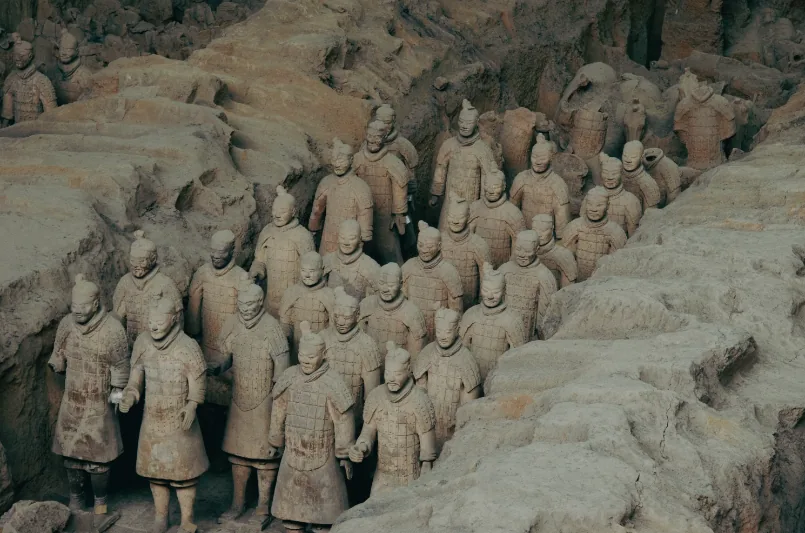
The mausoleum of the First Emperor and his army of more than 8,000 unique figures, a UNESCO World Heritage Site, is quite simply one of the greatest archaeological wonders in the world. Discovered by chance in 1974 by farmers digging a well, each terracotta soldier has distinct facial features, hairstyle and expression, created to escort Emperor Qin Shi Huang into the afterlife more than 2,200 years ago. Seeing it in person, in the vast excavated pits where archaeological work still continues, never fails to impress even the most seasoned travelers.
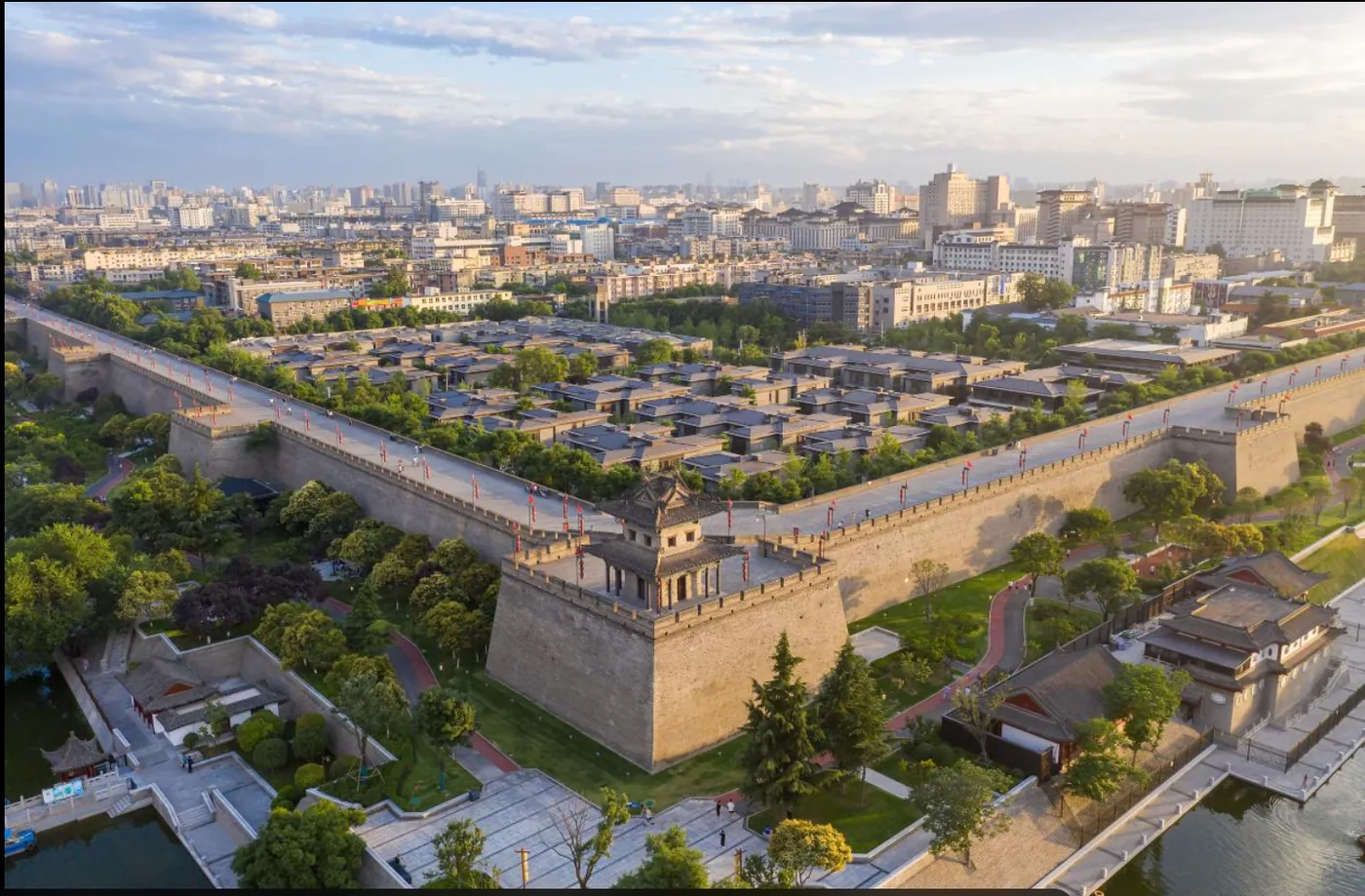
Cycling along the Ming wall that encircles the historic center is one of Xi'an's most singular experiences. Built in the 14th century, with a perimeter of nearly 14 kilometers, a base thickness of up to 18 meters and 98 watchtowers, it is one of the best-preserved city walls in all of China. Pedaling along its wide top, with sweeping views over the rooftops of the old town on one side and the bustle of the modern city on the other, offers a unique perspective on this ancient imperial capital.
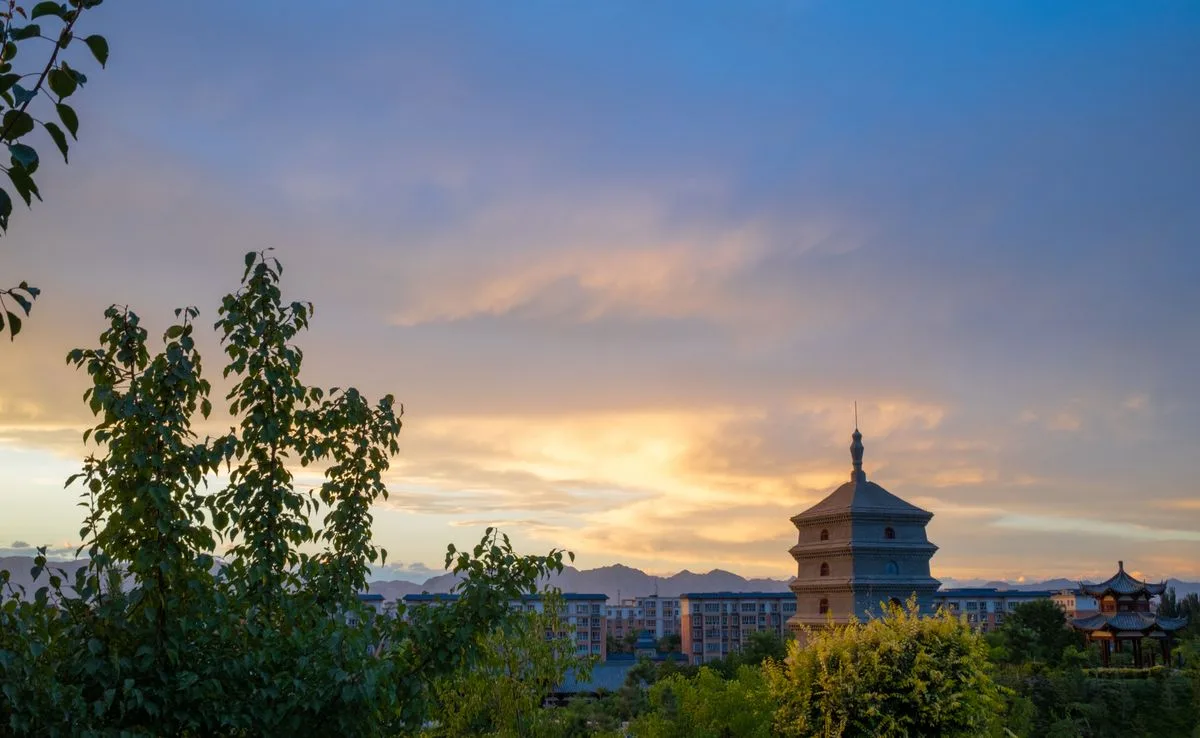
This seven-story Buddhist temple, built during the Tang dynasty in the year 652, once housed the Buddhist scriptures, statues and relics that the monk Xuanzang brought back from India after a seventeen-year journey that would later inspire the classic novel "Journey to the West." It remains an essential symbol of the city, and its surrounding square, with fountains and sculptures dedicated to the traveling monk himself, is today a lively gathering spot both day and night.
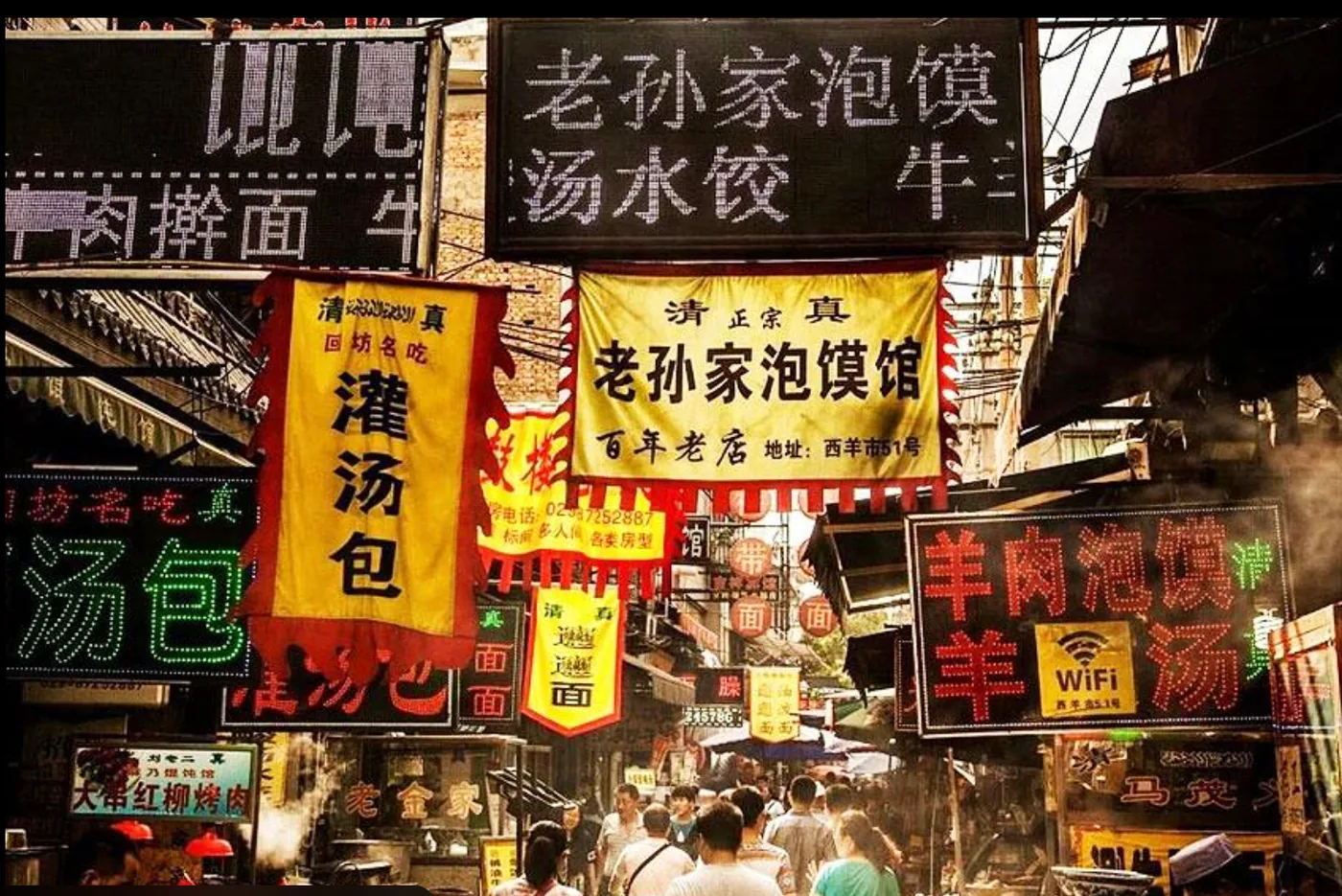
Its night market street, alive with the aroma of spices and the bustle of street stalls, reflects centuries of presence of the Hui people — Chinese Muslims descended from Silk Road merchants — and a cuisine found nowhere else in China. Hand-pulled biang biang noodles, charcoal-grilled lamb skewers and freshly baked sesame bread blend into a sensory experience that combines the best of Chinese cooking with the culinary traditions of the Central Asian Islamic world.
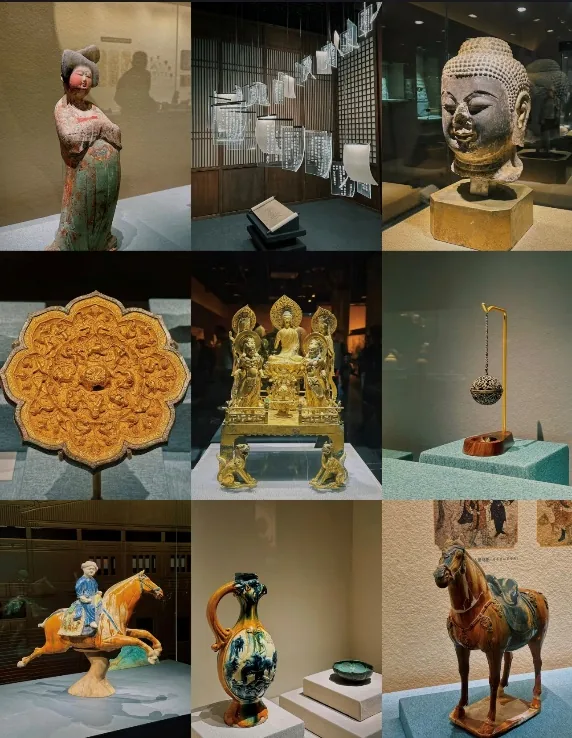
A one-of-a-kind museum devoted to Chinese calligraphy carved in stone, founded in 1087 to protect a collection of steles already considered of incalculable historical value at the time. Its thousands of carved tablets, some over 1,800 years old, span centuries of history, art and thought, including classical Confucian texts engraved in stone to preserve them from destruction — a unique stone library found nowhere else in the world.

In the heart of the historic center, these two monumental Ming-dynasty towers traditionally marked the rhythm of city life: the drum announced dawn and the bell signaled dusk, regulating the opening and closing of the city gates. Restored and illuminated at night, they remain the symbolic and geographic heart of the city, the point from which the rest of Xi'an's urban layout radiates.
Each of the more than 8,000 terracotta soldiers has a unique face and features — no two figures are identical.
The Terracotta Army lay hidden underground for more than 2,000 years until its accidental discovery in 1974.
Xi'an was the eastern endpoint of the Silk Road, the great trade network that connected China with Europe and the Middle East.
Xi'an's city walls, 13.7 kilometers long, rank among the best-preserved city walls in all of China.
Xi'an's Muslim Quarter reflects centuries of Hui presence, with a cuisine all its own found nowhere else in the country.
Xi'an was the capital of China for thirteen different dynasties over more than 1,100 years — more than any other city in the country.
Two full days are the minimum to cover the Terracotta Army, the city walls, the Muslim Quarter and the Giant Wild Goose Pagoda comfortably. On a Viavora private tour we recommend three days to include a deeper visit to the museum and an evening in the historic center at a relaxed pace.
The Terracotta Army Museum is located about 40 km east of Xi'an city center. On a Viavora private tour, your guide and driver will collect you from your hotel and manage all transfers, so you skip the public bus queues and arrive directly to the pits.
Spring (March–May) and autumn (September–November) offer the most pleasant temperatures — cool and dry, ideal for outdoor sites like the city walls and the Terracotta Army pits. Summer can be very hot and busy; winter is cold but considerably less crowded.
Yes — tickets for the Terracotta Army sell out quickly during peak season and must be purchased online in advance. Viavora handles all ticket reservations as part of your private tour package, ensuring skip-the-line access and no surprises on the day.
A private guide, handpicked hotels and skip-the-line access to every one of these sites.
Xi'an is an essential stop on any of our China circuits.